Murray Wood: The new phone books are here!
Once a Steve Martin catchphrase, Murray Wood says physical phone books are rapidly becoming relics of another age, but t...

One of Canada’s largest celebrations of Métis culture is set to return to the historic site of Batoche this summer.
Back to Batoche Days will take place July 16 to 19 at the Batoche National Historic Site, bringing together thousands of visitors for four days of music, sport, food, and cultural education.
Read more:
The event commemorates the Battle of Batoche, which took place from May 9 to 12, 1885, during the North-West Resistance. The conflict saw approximately 300 Métis and Indigenous fighters, led by Louis Riel and Gabriel Dumont, face off against about 900 Canadian government troops.
Victor Guillet, chair of Back to Batoche Days and president of Batoche Local 51, says the historical significance remains central to the event today.
“It was a conflict over Métis land rights, the decline of the buffalo hunt, and government inaction,” Guillet explained. “It marked the final armed resistance by the Métis and their Indigenous allies in the region.”
Guillet also shared a personal connection to the event, noting his great-grandfather, Maxim Lapine, who fought in the battle.
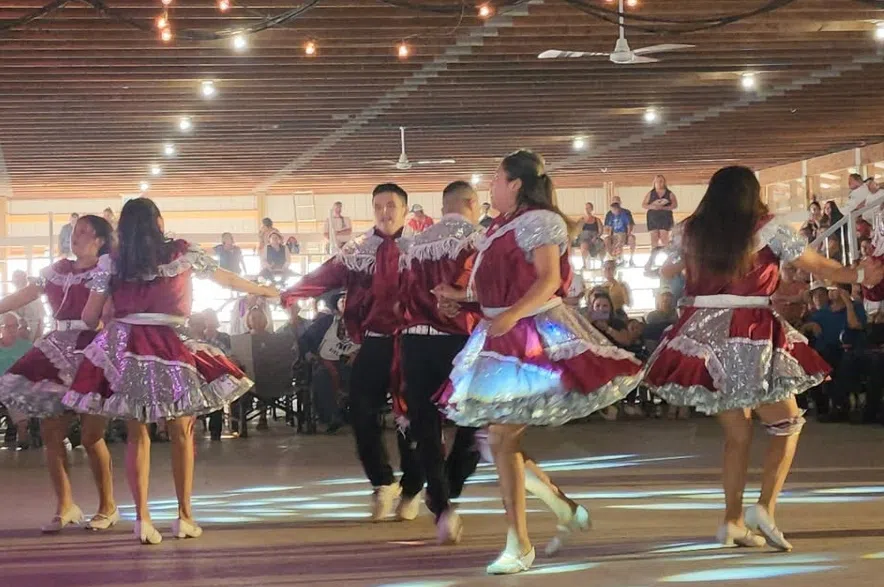
The Métis are widely known for their square dancing which will be on display throughout Back to Batoche Days. (Back to Batoche/Facebook)
While rooted in history, the modern-day festival has grown into a major cultural gathering.
“At this point now, we’ve turned into the largest outdoor Indigenous festival in Canada,” Guillet said. “Last year, I believe we had about 40,000 people.”
The four-day event attracts visitors from across Saskatchewan and beyond, including participants and performers from Alberta, Manitoba, and even Ontario.
Organizers say the continued growth reflects a strong interest in learning about Métis culture and history in an engaging and accessible way.
A key message from organizers this year is that Back to Batoche Days is open to everyone.
“We want everybody there; you don’t have to be Métis,” Guillet said. “We want everybody to come and celebrate with us.”
He emphasized the importance of creating a welcoming environment for those who may be unfamiliar with Métis traditions, offering an opportunity to learn through hands-on experiences, performances, and conversations.
This summer, Métis families won’t just walk the historic grounds, they’ll be able to explore them in a whole new way through Roblox.
The Métis Nation–Saskatchewan (MN-S) is preparing to unveil a virtual recreation of Batoche on the popular gaming platform, blending culture, language, and technology ahead of the annual festival.
“So, at Métis Nation, we wanted to create like a really fun and engaging way for Métis families, really, to celebrate our Michif language and our culture,” said Andrea Fiss, director of Early Learning and Sports with the MN-S.
“We wanted to do something where Métis families would see themselves in a game on a platform that’s widely recognized.”
The project aims to do more than simply recreate a place; it brings culture to life. Elders were consulted to ensure the Michif language is represented accurately, with the initial version featuring Heritage Michif.
“Within the game that we’ve developed, you will hear those stories and those voices coming through,” Fiss said.
They are also making sure the virtual Batoche mirrors the real-world site as closely as possible.
With the game nearing completion, it has reached the stage where outside input is needed.
Fiss is recruiting registered MN–S Métis youth citizens between 18 and 29 years old who have an interest in gaming, design, and technology to help develop the game the rest of the way and ahead of the festival. No prior experience is required.
The task of getting the game developed was given to Muskwa Games, which is owned by a Métis entrepeneur originally from Saskatchewan.
“He really helped to design and put out a nice format and a nice game that we really hope is going to engage our families and our youth,” Fiss said.
Organizers hope the project becomes more than a one-off.
“Beyond just being a map and a location, you know, more than just twinning our physical location, it’s also a cultural digital twin, which you don’t often see in any kind of game format.”
At the festival attendees will be able to try the game on-site using tablets, or access it on their phones through a QR code. Muskwa Games will also be there to provide support.
Because the game is interactive, Fiss said people can customize their experience to the point that if they buy a T-shirt in real life, they can go into the game and make their character also wear the same shirt.
“We’re really focusing on some of those fun places when you go to the festival, like the Little Jiggers Village or the Vermette Raceway or the Voyageur Games,” Fiss explained.
A dedicated language tent at the festival will feature programming focused on Michif, including Northern, French, and Heritage dialects. Attendees will have the opportunity to hear the language spoken and even try learning it themselves.
“There will be people there teaching Michif to those who are open to trying to learn it,” Guillet said.
The 2026 festival will feature a packed schedule with activities running throughout all four days.
Live music and performances will highlight Métis artists, including a kitchen party-style showcase featuring Jason Lapine of Winnipeg, J.J. Lavallee of Saskatoon, and Donny Parenteau of Prince Albert.
Visitors can also take in traditional dancing, fiddling competitions, and jigging, with dancers travelling from across Western Canada to participate.
Batoche Idol is set to return as well, offering a platform for amateur performers to showcase talents such as singing, fiddle playing, and dance.
“It’s a fun event,” Guillet said. “There’s a lot of talent coming in from across Western Canada.”
Several popular attractions are returning in 2026, including the Voyageur Games, which feature traditional challenges such as log throwing, fire starting, animal calling, flour packing, and trap setting.
The games are open to anyone interested in participating.
“You don’t have to be Métis,” Guillet said. “Anybody can sign up. It’s all for fun.”
At Vermette Raceway, spectators can expect a full slate of events, including Indian Relay racing, NWSPCCA Chariots and pony wagons, and CPCA Big Wagons.
Equine therapy demonstrations will also return, featuring rare Métis horses. Guillet noted there are only about 200 of these horses in the world.
New additions this year include mounted target shooting and flat racing, which organizers hope will draw additional interest.
With the size of the event continuing to grow, organizers are still looking for volunteers.
“Volunteers are always needed,” Guillet said. “The more volunteers you have, the shorter shifts you can do, and then people can enjoy the festival as well.”
Those interested in volunteering or registering for events can find more information through the official Back to Batoche website.
— with files from Susan McNeil, paNOW and CKOM News
Read more: