
Murray Wood: Who's hot... and who's not?
Every Friday, Murray Wood takes a look back at the week's news and decides who's hot... and who's not. This week's list ...
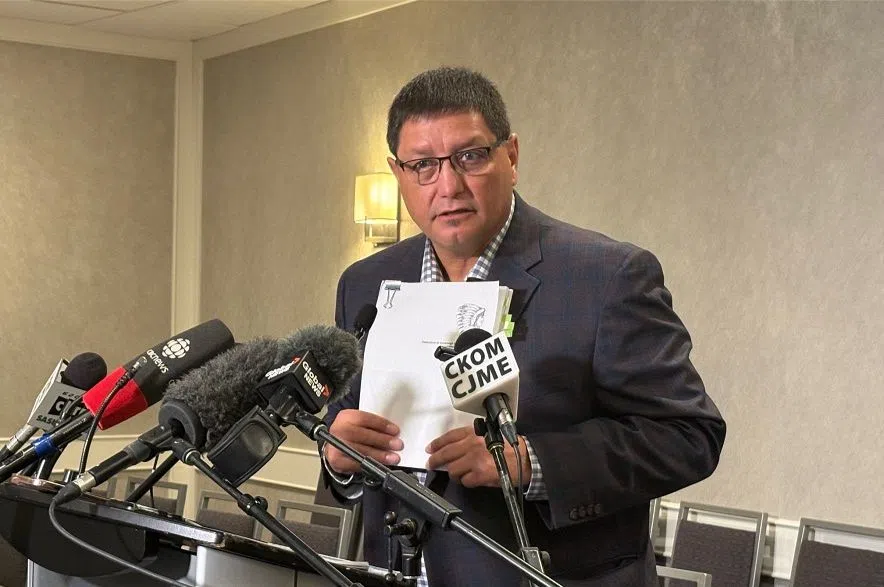
The concluded financial audit by Indigenous Services Canada (ISC) into the Federation of Sovereign Indigenous Nations (FSIN) is requiring a $28.7 million repayment by the First Nations group.
Speaking on The Evan Bray Show on Friday, Saskatoon Tribal Council chief, Mark Arcand, shared his perspective on the financial audit, who should be required to pay the money back and explained the governance structure of the FSIN.
Read more:
Listen to the full interview, or read the transcript below:
The following questions and answers have been edited for length and clarity.
EVAN BRAY: How does the Saskatoon Tribal Council and other tribal councils and the 74 First Nations (all) fit into the structure of FSIN?
MARK ARCAND: It’s basically the 74 First Nations have signed a Convention Act to be part of the FSIN. The FSIN mandates the treaty and inherent advocacy organization. When this organization started back in the day, they had no funding. The leaders of the day advocated for treaty and inherent rights. Moving into today, we have all of our tribal councils. For example, my tribal council –Saskatoon Tribal Council – I work for seven First Nations. I’m elected by their chief and councils and they’re based on a population. Other tribal councils like (Prince Albert) may have 12 First Nations. Throughout the entire organization of our tribal councils, when we talk about boards and commissions, we all have one seat, maybe two seats based on your population, maybe three seats based on your population sitting at these Treasury Board tables, or Education Commission, or whatever it may be. From there, for example, Treasury Board now has a Finance Audit Committee out of that Treasury Board. So every First Nation is represented through their tribal council.
That’s how you have a seat on the FSIN Treasury Board, because you’re the chief of the Saskatoon Tribal Council, so thus you have a seat on this, this provincial board?
ARCAND: To be clear, I’m appointed by my seven chiefs, so any chief can sit there, but they appoint me. A chief can also say, ‘Hey, instead of you going there, tribal chief, we’ll send in this chief, right? They represent the seven nations that go there and that’s my role.
You are, I would say, heavily involved, or you’ve got an important position with FSIN. Treasury Board is an pretty important board in the organization structure, the administration of an organization. Give me your thoughts on what we’re seeing unfold with the results of the audit and the ask for $28.7 million to be repaid?
ARCAND: Let’s be clear and let’s be frank about this. FSIN is a nonprofit. They are incorporated. The incorporation documents they sign is by the chief, which is Chief (Bobby) Cameron, and the four vice chiefs. That’s who the contributions agreements go to through FSIN. So any type of funding that comes in, they sign the contribution agreements on behalf of the 74 First Nations. So in reality, we look at how a board structure works. They are exactly the same as the Saskatoon Tribal Council. We are not governments. FSIN is not a government. Saskatoon Travel Council is not a government, no other tribal council is a government. There’s only 74 First Nations governments in this province that have a nation-to-nation relationship. We’re all advocacy organizations. We have a mandate as a Treasury Board from the 74 chiefs through a policy procedure process. We’re supposed to be involved. However, when it comes to the audit of of the FSIN, the actual board of directors sign off on the audit each and every year, not the Treasury Board members. Chief Bobby Cameron is the chair of the Treasury Board. However, police are investigating police, or police are policing police. The chief and the vice chiefs have been elected by the 74 nations. However, they’re the board, so they’re reporting to themselves. There’s no oversight, there’s no accountability, there’s no transparency. In my opinion, that’s a conflict of interest. We’ve got to change that model. And they’re the only institution out of our whole entire organizations. Somebody like SIGA (Saskatchewan Indian Gaming Authority) has one representative from every tribal council being their board. They’re all part of the FSIN except for this FSIN board. We’ve got to change that and have the same type of representation to create oversight and better accountability and better transparency.
Governance change has to happen, is your point. But if we reflect on this, it’s not unheard of – after the pandemic, after a lot of COVID funding was flowing to different organizations – for the federal government in some capacity to come back and say, ‘Nope, that is not authorized spending.’ I mentioned this happened in Regina, in the REAL district … there’s got to be some reparation made in terms of unauthorized spending that happened. This is not unheard of in the country, but was there an ability while this money was being spent on things that, ultimately ISC has deemed to be ineligible and unsupported – was there an opportunity for you as a Treasury Board member to step in?
ARCAND: Absolutely. We think about the actual opportunities as a Treasury Board. When we first heard about this, the letter was sent out. They were transparent in the letter to say they were on their forensic audit. Great. Then the process happened, where the line-by-line – which was what the KPMG has done to say, ‘Hey, this many transactions’ – and we have to remember, this was just a sample out of their entire corporation, so it wasn’t the entire funding stream that they get. So for example, they may be a $50 million corporation and every year for three years or however long, the audit was three or four years that they went back, $4 million was deemed ineligible. So when we went through this whole process, Treasury Board was invited. They were told in an email from the CEO that you can attend. However, all this stuff is confidential. There’s names in there, and I stayed away. I wasn’t going to be sued by individuals knowing what was going on. Going from there, because we let the staff, they put themselves in the situation – they’re managing the agreements, they’re managing the money that’s part of the corporation. The executive is in charge. They have to take responsibility and ownership. So I stayed away.
However, the actual audits each and every year of corporation – for example, it could be 150 pages – This information is never, ever given to the owners of FSIN, which are the 74 First Nations. So to be fully transparent, they should be seeing all the transactions of what goes on in the organization, seeing which program is actually has revenue, what are the expenditures and ask questions to the board of directors, because they sign off on the corporation. All Treasury Board does is making the decisions to say this has all been vetted through the departments, everything else is going through. So when we think about the forensic audit, that’s why I’ve been quiet for the last five months. We’ve actually let them do their work through the professional organization of KPMG, and this is the result that came out. I don’t believe anybody sat on there, I’m not sure, I wasn’t privileged to it. I don’t know what’s happening. Moving forward, as a Treasury Board member, we have not had a meeting since, to find out exactly what the financial situation of FSIN is in this past current year. We’ve been hearing that they’ve had zero money delivered to them from ISC. We can’t verify that. There’s no transparency to the Treasury Board, and then the Treasury Board then gives the information to their chiefs, so we don’t know what’s going on. It’s very problematic when people say we’re going to court. Who’s authorizing that? Who’s paying for that? Where’s the money coming from? And if $28.7 million is going to be clawed back, FSIN – as an incorporated body – has no own source revenue, so who’s going to pay for that? Is Canada going to give FSIN money to pay Canada back? If they do, that’s wrong. I don’t think they will. I’d advocate against that because that opens the door for everybody else to do this and get a slap on the wrist.
We’ve been talking about the fact that iIndigenous Services Canada has concluded a financial audit which determined there were a number of ineligible, unsupported expenses to the tune of $28.7 million that they are now looking for FSIN to repay. In your time on Treasury Board, chief, have you seen like you have examples of spending that you brought up as being problematic?
ARCAND: Absolutely, there’s several. I’ve always been very adamant about, in 2023 the Treasury Board went to Las Vegas for a retreat. We supported that. I supported it. However, I did not attend. There’s only 12 people on our Treasury Board. It was budgeted for about $50,000. We found out through the forensic audit, it came back at $96,000 and 21 people went. There’s no disclosure to the chiefs to say, these are the 21 people that went, this is why we went over budget, and they’re not staying within the guidelines. So Treasury Board didn’t actually approve more funding for that. That’s the clarity and the transparency we’re not getting. Those are the type of things that have to happen. When we talk about the the vehicles, the fleet vehicles. Yeah, they were supported, but I didn’t know anything about selling them internally. When we see individuals buying vehicles – 2021 Grand Cherokees – for $3,000 as a lease vehicle. So, for example, STC has lease vehicles. We lease them from the company. Once we’re done with the lease, we go back and we give them to the company. Then, if an employee or whoever wants to buy them, you go to the company, you make your arrangement. STC is out of it. This different scenario is not appropriate because there’s conflict of interest in there that is not being called out. The building is another big one about full transparency. Where did the money come from? Well, they say admin fees, loans, grants. Okay, admin fees can’t be used for capital. I operate the same way. I have terms and conditions inside of this. So, the clarity and showing the proper business plans to the chiefs. People will call this micromanaging – it’s not. It’s called oversight. Oversight is good. When we think about all these examples, I have a problem. If this forensic audit was $1 million, I could probably sleep at night, but this is $28 million. This money was supposed to go to First Nations people to have a quality of life and that’s not happening. Somewhere along the line, mismanagement – I’m not saying anybody’s stealing, that’s not for me to say that – my thing is we’ve got to clean up the mismanagement. We’ve asked for a governance review. It was denied. Obviously, the way FSIN works was good 20 years ago. It’s 2026. We have to reset and get the credibility back to this organization by making drastic changes immediately, but there has to be some accountability and transparency moving forward.
So what is the fix? How do we get there, chief? FSIN is an important organization in the province. I rely on them to come on this show to talk about their take, their view on certain issues. They meet with government. But whose responsibility is it to make the change? And if it’s the 74 First Nations chiefs, do they have that ability within the governance structure that’s set up?
ARCAND: You’re absolutely 150 per cent correct. It is one of the most important organizations in First Nations in Saskatchewan. That is a strong organization for treaty rights and inherent rights, and we’ve got to keep it. Who has to make that change? You’re right again, the 74 First Nations, because now you understand the structure. The owners have to say this is not working. We should all be concerned about that $28 million because, again, how do we pay it back? Where does the money come from? First Nations (communities) should not be paying this back. If they want to, that’s up to them, that’s their decision. That’s for their community. But our Saskatoon Tribal Council says we’re not putting in a dime because we did not make these mistakes.
Who should pay it?
The FSIN and is an incorporation. They’re a nonprofit organization so the responsibility falls on the chief and the vice chiefs. They’ve signed the incorporation. They get the funding, so they’re the ones that are responsible. They should be able to coming back and saying, ‘Hey, do we have to downsize the organization?’ We don’t know. Are they going to get funding? We don’t know, but we’ve got to keep that organization alive, because the history of that organization has made a difference in treaty inherent rights. I believe in that organization but I don’t believe in the mismanagement of what’s going on because of the lack of accountability, not only our First Nations leadership, but to the general public, because this money is coming from Canada. So I believe we have to have strong internal discussions to improve this organization, to create that accountability and transparency and move forward in a good way.