Murray Wood: Is it fake, or just stolen?
People looking for news on Facebook need to watch out for fake content. And even if it's true, it may have been stolen. ...
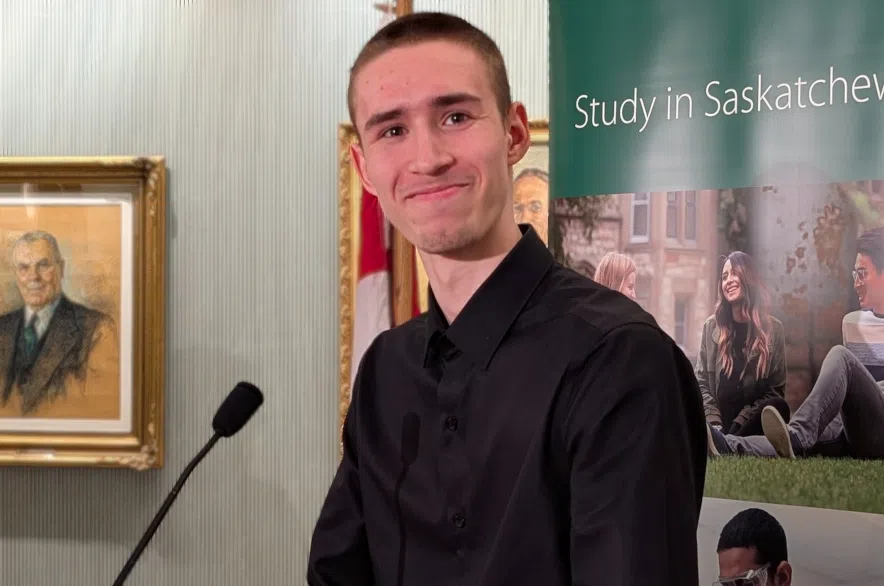
Anton Merzliakov came to Saskatchewan with his family from Kiev, fleeing Russia’s war in Ukraine. They arrived on one of the first humanitarian flights, which were organized with the Government of Saskatchewan as a partner.
“Originally, we planned to stay in another province but after seeing the support we received from both the government and the community, we decided to stay in Saskatchewan,” he explained.
He was still in high school when his family arrived in Saskatchewan but he’s now in his first year of studying software system engineering, which is something he always wanted to do.
Merzliakov spoke on Tuesday, when the provincial government announced a four-year extension to its program allowing Ukrainians who arrive under the Canada-Ukraine Authorization for Emergency Travel program to pay domestic tuition rates instead of international ones.
The University of Regina estimates domestic tuition and fees for one year at $7,648.10, while international rates are $27,000 yearly.
Merzliakov said his immigration status is still evolving, which means student loans aren’t available to him, and makes international tuition rates difficult for his family.
He said the expansion of the program provides opportunity for Ukrainians like him to get into Canadian life and get higher education. He said it means a lot to him and other students to be able to have this tuition program.
“We feel welcomed in this country, in this province. It’s a big relief on the finances for those families,” he said.
Carolyn Warnyca-Griffin, board secretary of the Saskatchewan provincial council of the Ukrainian Canadian Congress, said the extension of the program sends a powerful message of stability, opportunity and solidarity from Saskatchewan.
“Classrooms become more than places of study; they become spaces where resilience is strengthened, friendships are formed and futures are rebuilt,” she said.

Advanced Education Minister Ken Cheveldayoff. (Lisa Schick/980 CJME)
Advanced Education Minister Ken Cheveldayoff said it’s a good feeling to be able to stand up and make the announcement.
“We’ve been with the Ukrainian population right from day one when they came to our province, and the Ministry of Advanced Education has been there helping along the way,” he said.
The minister said everyone in the government and educational institutions are on the same page.
“We’re all working together, and we’re putting the students first, that’s something that this government feels is important, to put the students first, make sure it works for them and we’ll continue to do that,” said Cheveldayoff.
Merzliakov plans to finish his schooling and start building a career.
“Staying in Saskatchewan is something I would really consider since this province became a new home for me and I want to be here,” he said.
In the fall, the Sask. NDP brought up the ending of the original tuition program as a concern.
On Tuesday, the NDP’s Keith Jorgenson said in a statement that he’s glad for the action from the provincial government, but maintained his concerns, asking questions of Cheveldayoff about why he “dragged his feet on this issue”.