
Sarah Mills: The perils of social media are indicated in a new ad playing in Ireland
Sarah Mills says a new commercial warning about the dangers of oversharing on social media should have all of us pausing...
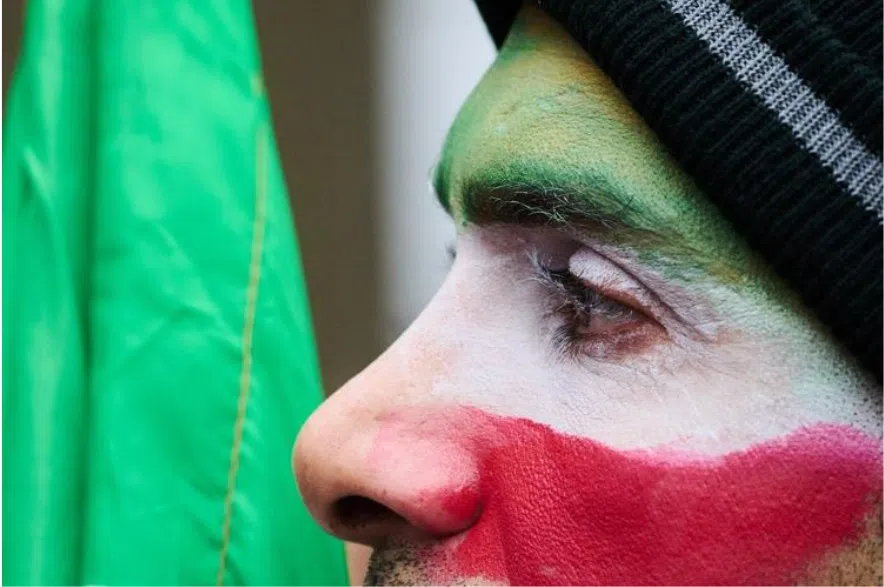
The world is watching closely after the bombardment of Iran by Israeli and American forces, which began in the early morning hours on Saturday.
In response to the attacks that killed Supreme Leader Ayatollah Ali Khamenei, Iran has struck neighbouring countries with missiles and drones. But while the conflict in the Middle East can sometimes feel very distant, that’s not the reality for the many Iranian Canadians living in Saskatchewan.
Read more:
Pooyan Arab is the executive director of the Iranian Association of Saskatchewan. He joined guest host Brent Loucks on The Evan Bray Show on Monday to explain what it’s like for Iranians living abroad who are watching the developments in their home country.
This transcript has been edited for length and clarity.
BRENT LOUCKS: What’s it been like for you and your community over the past 48 hours, to wake up Saturday morning to see the developments and the ongoing fighting that’s happening there today?
POOYAN ARAB: It certainly has been a roller coaster of emotions over the past couple of weeks. When we received the news that the attacks have started, initially it was ‘OK, this is really happening,’ but once the news started coming in, I can tell you, the overwhelming emotion is hope.
There’s always hope, right?
ARAB: Yes. These are uncertain times, but for Iranians who chose, if you could call it that, to live abroad, away from Iran, there is now, for the first time in 47 years, hope for change.
With the the death of the ayatollah in the bombing attack on early Saturday morning, does that give you hope there is going to be an actual change in the regime, or is it going to be the same people, same issues, continuing on?
ARAB: It was a big milestone. It was such big news that it probably took all of us maybe more than 24 hours to believe. I have to say, just replacing him from with someone from within the system is not going to bring about any change, but for us it’s a stepping stone to an actual change in the in the whole regime structure.
I know that you had a couple of rallies on the weekend in Saskatchewan. How was the mood at those rallies?
ARAB: Since the massacre in January, we’ve had weekly rallies and gatherings. This Sunday, we also had a scheduled gathering. If you want to know how the community feels, I just have to tell you that the rally turned into a celebration.
I can imagine, yes.
ARAB: We all know that this is just the first step, but even this seemed so far. We’ve hoped. We’ve tried everything. We’ve tried voting differently in that country. We’ve tried reforms. We’ve tried peaceful marches. We’ve tried everything. So this is our this is our last straw of hope.
So what would be your ideal outcome of this military action in your homeland?
ARAB: The ideal situation would be that the Islamic republic’s remaining officials accept that they have no legitimacy with the people, and they just abolish. The majority of Iranians are calling for the crown prince to be the transitional leader for the transitional government, and that’s our hope. We establish a transitional government and then hold a referendum for the type of government that will be there. Given that that’s what we hope for, I don’t really think the people who are currently in charge of the Iranian regime are going to easily capitalize on this.
I understand the population of Iran is around 90 million. Is it easy or impossible for a citizen in Iran to leave that country under this regime right now?
ARAB: At the moment, it’s impossible. Generally speaking, the government has to allow for you to leave, which means if you’ve had any sort of political activity, if you have social activity, you’ve had anything that the government doesn’t like, you will not be able to leave the country. I haven’t set foot in Iran for 14 years, and that’s because if I know if I go back, I will not be able to leave. I’ll end up somewhere that I definitely would not like.
And is that just because of your political standing?
ARAB: Yes. You have to understand the government that shoots people on the streets with a .50-calibre machine gun is not going to easily tolerate any sort of dissident view or anything like that.
Is there enough organized dissident activity to help bring this regime to an end?
ARAB: There certainly is. We saw the millions that took to the streets in January in over 400 cities across Iran. Right now, Reza Pahlavi, the crown prince, has asked people to stay indoors and stay safe until the system of oppression is weakened enough for them to actually do their part.
If indeed this regime comes to an end and it’s a whole new day at some point for the people of Iran, do you think a lot of Iranians that left would choose to go home?
ARAB: I’m pretty sure many will. We have to be realistic. The damage that has been done over the last 47 years is not going to be easy to repair internally, international relationships and all of that, but I’m pretty sure many would choose to go back and help rebuild the country.
What advice would you have for Canadians outside the Iranian community help them better understand and support people like yourself during this time?
ARAB: That’s a very good question. When I receive calls or messages from my Canadian friends, it’s showing worries and concerns about what is happening in Iran. I’m not about to pretend like having a war is not worrisome. At the same time, I want all Canadians to understand that we don’t see this as a war against our country. Regardless of the intentions of everyone, all the players, we see this as a liberation mission. It would have impact here in Canada. We know Canada is one of the playgrounds for the (Islamic Revolutionary Guard Corps) and Islamic republic regime. We’ve seen the terror attack in Texas. This will be for a better world and for for the Iranians to have a free country.