

Murray Wood: The Pitt is actually rather elevating
Murray Wood doesn't talk about TV that much, but he has become a fan of medical drama The Pitt. Wood says he enjoys the ...
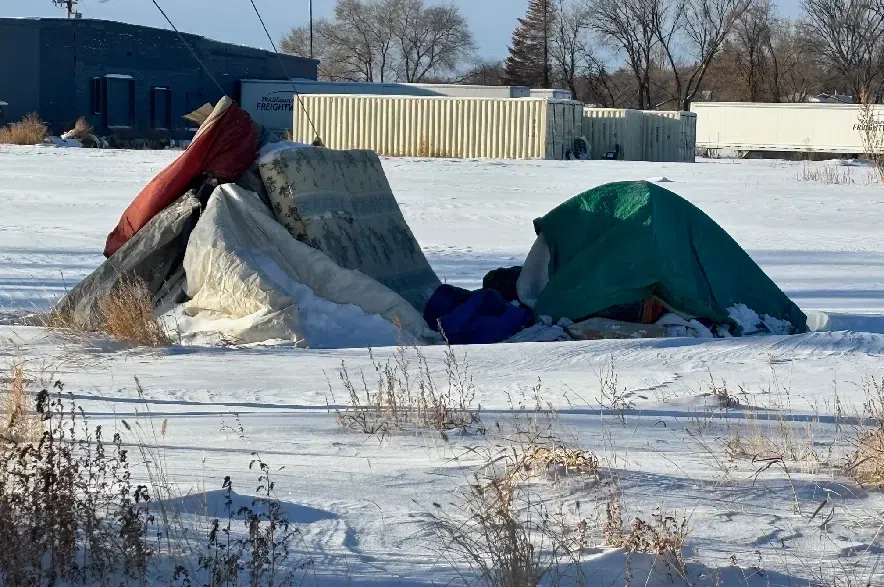
Saskatoon City Council has voted to relocate a drop-in centre to support the city’s homeless population from its previous location on Avenue C to a new home on Idylwyld Drive.
Council approved the purchase of the property at 130 Idylwyld Drive – at a cost of more than $1.6 million – in a 7-4 vote on Wednesday. The sale is expected to close on March 20. The building will then be leased to the province, which will in turn lease the space to the Saskatoon Tribal Council, the organization which will be operating the centre.
Read more:
During the meeting, several speakers asked council to consider a different location. Many cited safety concerns and worries about the centre’s impact on the surrounding area, including optometrists Dr. Kristine Wilkinson and Dr. Sheryl Piteau, who own Prairie Optometry at 116 Idylwyld Drive. They purchased the property on Aug. 1.
“We believed in the council’s vision for the downtown revitalization,” Wilkinson said.
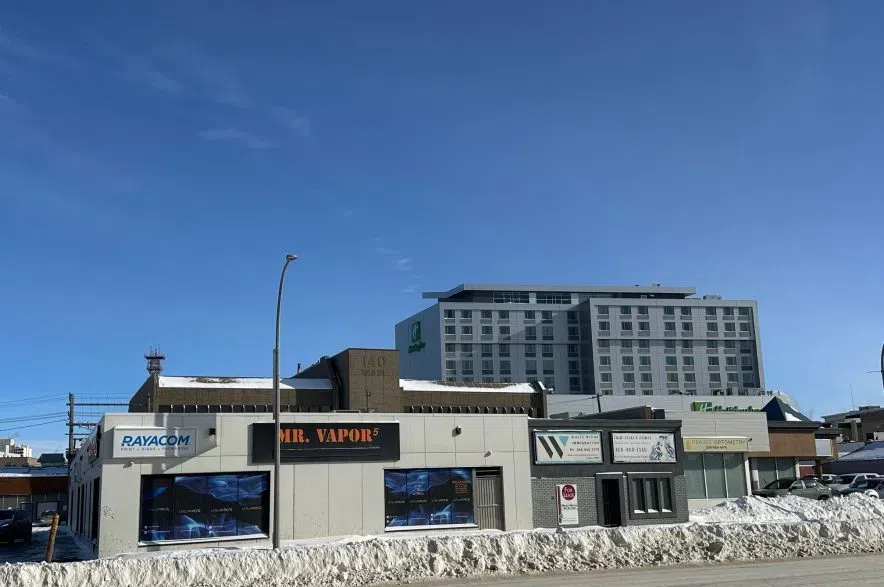
Several local business owners made presentations to council expressing their opposition to the proposed new drop in centre at 130 Idylwyld Drive. Council ultimately voted in favour of the new location. (Libby Gray/650 CKOM)
“Had a drop in shelter or a homeless shelter been operating two doors down at that time, we would not have purchased this property or invested over $200,000 in tenant improvements and renovations for our clinic.”
On Thursday, Lesley Anderson, the City of Saskatoon’s director of planning and development, joined guest host David Kirton – a former Saskatoon city councillor – on The Evan Bray Show to share more details around the decision and what the new centre will look like.
The following transcript had been edited for length and clarity.
KIRTON: Every time this subject comes up at city council, there is opposition. Would there be an area, would there be a street or a little section in Saskatoon where this could be placed where there would be no opposition?
ANDERSON: I don’t think so. We’ve seen opposition in every location where we’ve where we’ve looked, where we’ve brought forward locations. And looking across the country at all the other communities dealing with the same thing, they see that same opposition, which is totally understandable, but it means there is no perfect place where we can find a site and a building that people won’t be in opposition to.
This one is a drop-in centre versus a shelter. Let’s talk about the differences here. A shelter is where people stay, and could stay for a matter of weeks or even months. That’s not the case with the drop in center?
ANDERSON: That’s right. And I think the easiest way to differentiate between the two is, a shelter provides beds, and in Saskatoon the shelters that we have are linking people with ongoing case management to help them move through and find housing and connect with services and those types of things. A drop-in space doesn’t have beds. It’s meant for people to be able to come in, spend time there and rest. They can access snacks and water and coffee and connect with people at the center, but it’s not a place of providing beds and long-term stays.
But being that it’s a drop-in centre, could that not mean that there would be more people outside as people come and go, versus a shelter?
ANDERSON: There is some of that, because it is more informal and it’s less programmed, but it is part of the work of the service provider to engage with people as they come and also to make sure that they’re not hanging around unnecessarily, loitering and those types of things. And we also bring forward a co-ordinated safety plan around these sites, so that we have a variety of resources that will help alleviate any concerns like that, and to move people along as well.
You mentioned co-ordinated safety. That’s something that even four or five years ago, it really wasn’t together like it is today. From what I remember, you’re making decisions now with police being involved in those decisions and that sort of thing.
ANDERSON: Absolutely. There’s a co-ordination among Saskatoon fire, Saskatoon Police Service and the city to look at what types of patrols do we bring into the area? How often? What times a day should they focus? Are there particular businesses or operations nearby that need some extra support? We’ve had a dance studio that we’ve provided extra support, day cares, those types of things. It’s much more co-ordinated than it used to be. And really recognizing how we can work together to alleviate some concerns.
That doesn’t seem to appease many of the nearby businesses. When I sat in chambers and heard some concerns, my stomach would get a little tight. At that time, it was the one on 23rd Street behind the bus depot, and then there was a daycare there that, quite frankly, I didn’t know about it. So do you do you get a little bit of a stretched stomach sometimes when you hear some of these concerns?
ANDERSON: Absolutely, we all know that concern about any type of change is is hard for people, and it’s hard for us as residents and humans living in our community. We all understand that, but we also believe that with the right resources and the right supports and the appropriate planning that we can mitigate those concerns.
Let’s go through the process. You purchased the property on Avenue C. Was that always going to be a temporary drop-in center?
ANDERSON: Well, we brought it forward for it to be a longer-term option, and council heard the concerns from the community and they approved it only as a temporary location, and we committed to continue to looking for an alternative.
I think a lot of people are saying “Well, why did they go buy that building and make that the drop-in centre? And now they’re changing their minds.” You’re not necessarily changing your mind. You had made this plan to begin with.
ANDERSON: It was definitely a direction that we had from city council about how they wanted to treat it. That’s part of our job, is to respond to what they direct us to do. And we had committed to continue to looking, so now we’ve brought forward an alternative. This one has been approved for a longer term now, so that’ll let us stabilize, and we have to then figure out what we’re going to do with the 325 Avenue C location.
You’ve got some property that you’d like to get rid of?
ANDERSON: Not necessarily. It could transition to something else. We have a variety of options, so we’re going to look into that more and report back to city council.
Was there concern about the tribal council? There was concern, of course, on the west side, about the tribal council, and there hasn’t been as much concern about The Mustard Seed, it seems. And, as a matter of fact, around The Mustard Seed facilities I don’t think we’re hearing a lot of concern. Was there concern at the city council meeting yesterday about tribal council operating this?
ANDERSON: No, that didn’t come up. And we really haven’t seen that concern with 325 Avenue C, either. Over the years, as the tribal council has moved into this space and learned how to operate the facilities and really understand the situation, they’ve been able to resolve some of the issues they were seeing earlier.
We’ve got Mark Arcand, the chief of the Saskatoon Tribal Council, calling for council to move fast on this so that it’s opened by September. It has been late. Lots of times the decisions have been late. Things have opened in the middle of winter. What is your time frame on this?
ANDERSON: We’re not able to start renovations even until the beginning of June, and we need to make sure we get the building in the right state, so we’re planning to open for November 1.
Again, just a little too late. Well, I guess November 1 isn’t terrible. It’s certainly better than any kind of January opening. But you’ve tried to shoot for September, were you, at the beginning?
ANDERSON: No, November 1 has been what we’ve dated for this location all along, and it aligns with how the province does their agreements for service providers as well. So looking at a winter versus a summer operation, November 1 would be the start for any winter operations.
Many of the people I talked to, Lesley, say “How come we’re not putting anything on the east side?” And I know you’ve heard that many times. Are we are you still looking on the east side? Or did you look on the east side at all for properties?
ANDERSON: Well, we’ve been looking for properties for shelters and these drop-in centres for a number of years now, so we have looked citywide. There are some particular challenges around zoning and availability of buildings that we’ve seen on the east side, so it’s definitely not excluded from any search, it just hasn’t had an opportunity we could seize.
Are we done? We’ve got two shelter Well, no, we got more than two shelters, and we got two drop in centres. Are we done?
ANDERSON: As of today, I don’t think we’re continuing to look, but we’re going to be figuring out with the province what other services they’re going to need, and what we’re going to be working with them on going forward.
–with files from 650 CKOM’s Lara Fominoff