
Wood file: Canada can lose occasionally and still be No. 1
Canada was snakebit in the gold medal hockey game, and sometimes, even when you dominate the other team, you come up sho...
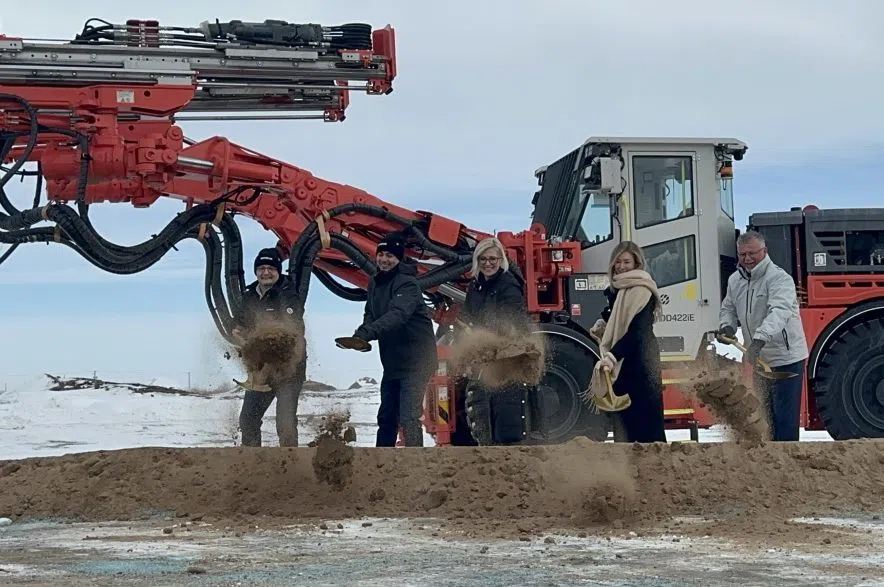
A $51 million mining equipment manufacturing facility has broken ground in Saskatchewan.
“You have to mine the potash wherever God puts it,” said Thomas Vallant, president of the chemical cutting division with Sandvik. “This is the biggest deposit in the world, in Saskatchewan.”
Read more:
Sandvik started work in Saskatchewan in 2008, doing mechanical cutting work as an introduction to potash customers in the province. Vallant said the company had developed quite a bit of unique, specifically-designed equipment for the local potash industry and are now in the midst of delivering several significant orders to customers in Saskatchewan.
“This is the right time for us to open this new service facility to support that business in the future,” Vallant said.
With Saskatchewan the largest potash-producing province in the world, and Sandvik’s cutting well-suited to that sort of excavation, Vallant called it the “right and perfect place” for the business to be.
Sandvik Mining and Construction is part of the global engineering and equipment manufacturer Sandvik Group, the same company that has been awarded various contracts for the Jansen potash project in Leroy by BHP. The multinational company operates across 150 countries.
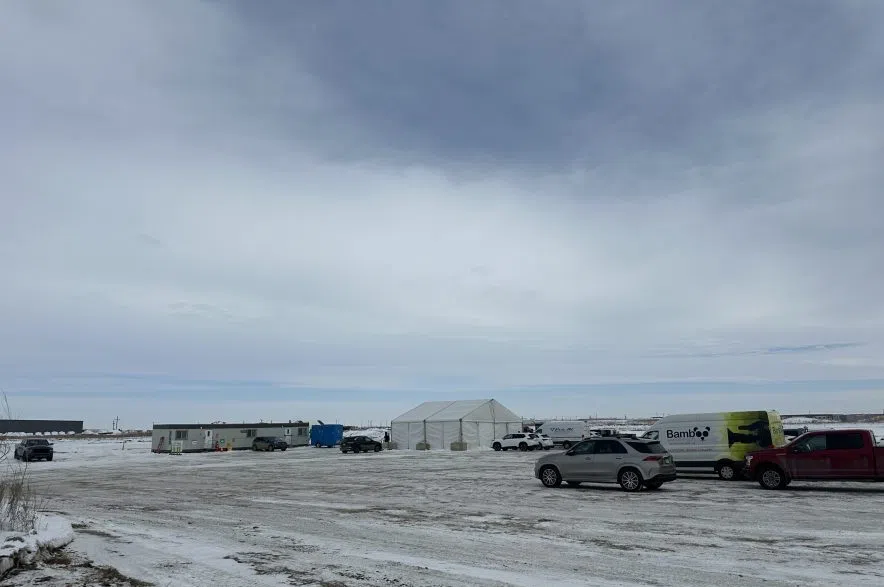
The site near Marquis Drive in northern Saskatoon for the new mining equipment equipment manufacturing facility that Sandvik Mining is set to build by the end of the year. On Feb. 23, 2026, the company and province broke ground on the project. (Libby Gray/650 CKOM)
Saskatoon Mayor Cynthia Block and Jamie Martens, Legislative Secretary Responsible for Trade and Export Development, broke ground alongside Sandvik’s mining vice president of sales area Canada, Peter Corcoran and Vallant.
The facility, located east of Highway 11 and north of Marquis Drive in the North Marquis Industrial Area, is expected to bring mechanical cutting, parts, services and after-market support together under one roof for mining sector efficiency, to benefit central and western Canada.
According to a release from the Government of Saskatchewan, the investment by Sandvik in the facility will “create new jobs and grow the economy while enhancing critical infrastructure needed to support the mining industry,” Trade and Export Development Minister Warren Kaeding said.
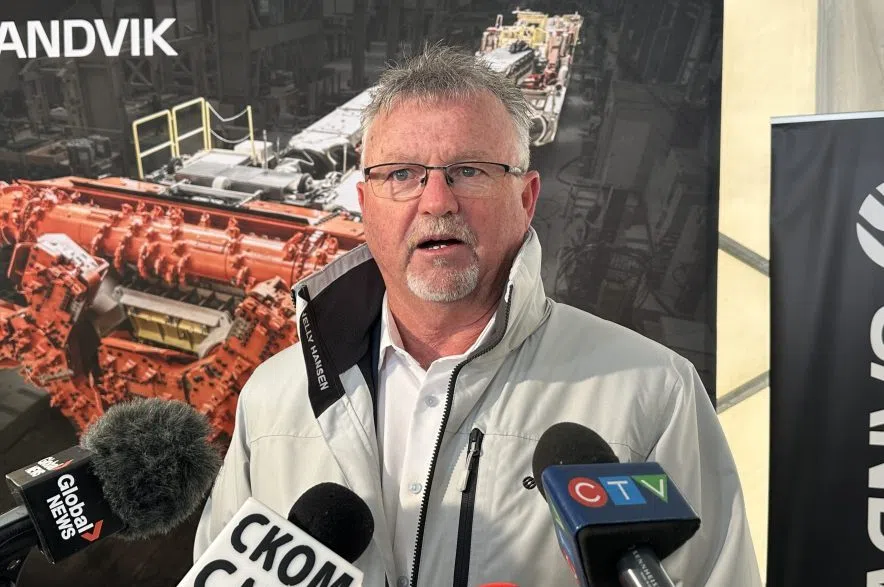
Sandvik mining vice president of sales area Canada, Peter Corcoran, said the Saskatoon facility will strengthen the company’s local presence in a “key mining region,” and ensure capacity, infrastructure and expertise to support its customers. He said he was excited to partner with Indigenous communities through the facility and mining on Feb. 23, 2026. (Libby Gray/650 CKOM)
Corcoran said the Saskatoon facility will strengthen the company’s local presence in a “key mining region,” and ensure capacity, infrastructure and expertise to support its customers.
Vallant commented that Sandvik had first set sights on Saskatchewan almost two decades ago, but some customer product delays and prototype testing led to the company making the leap in 2026.
When companies mine a resource underground, it is then transported to the surface by shaft before being taken to a processing mine, Vallant explained. That plant will create the final product — fertilizer, in the case of potash.
Other places where potash is plentiful in the world include Belarus and Russia, but Vallant noted those countries are facing export restrictions. Historically, according to the province’s release, this sort of work has been done overseas. Offering these positions here brings jobs to Saskatchewan.
“This is a very good opportunity for Canada to step up production,” he said, calling the country’s mining environment “very stable” and appealing to big mining companies as a result.
Vallant said BHP’s Jansen potash mine will be less than two hours drive from the new facility in Saskatoon.
“There is the necessary infrastructure available that we need, because we will need the support from other local suppliers on machining, and we need service technicians that can travel to and from the workshop every day,” he explained.
“It’s the close proximity to the mines which is the main reason why we’re here serving Saskatchewan.”
Along with the building and operating of the new 51,000 square foot facility, Corcoran said the company wants to participate in the impact that happens when companies operate on Indigenous lands.
“Obviously we’re benefiting from the growth of the mine, and we want to put back in with the Indigenous communities … and build capacity for them for the future,” Corcoran said.
“We see ourselves as a partner with the mining companies during this time, so we’ll be looking for apprenticeships, training, employment, education is a focus that we’ll look at.
Corcoran said some of this work has already begun.
At this time, the manufacturing Sandvik does for its product is mainly in Austria. Corcoran said the intent is to find suppliers who can manufacture components for their company and build on that, “so we have partnerships where we manufacture goods in Canada by Canadians and in Saskatoon by people in Saskatchewan.”
With the current trade and tariff landscape, Corcoran said it’s important to build capacity inside Canada as much as possible.
“We think tariffs will probably be there for a long time, even after the current (U.S.) administration’s gone,” he said. “It’s not our intent to be trying to bring in products from the U.S. and get tariffs,” Corcoran said.
The release from the Government of Saskatchewan said the province is home to 27 of 34 critical minerals that have been identified as strategically important for Canada. Demand for these minerals is expected to grow in the coming decades.
“Our government continues to place priority on driving innovation and creating new economic opportunities in the province,” Kaeding said in the release.
The new facility is expected to open by the end of 2026, creating about 30 jobs for skilled labourers in mechanical cutting, assembly, service and maintenance of products.
Read more: