

Murray Wood: Mark Carney is a prime minister with clear vision
Murray Wood says neither Justin Trudeau or Donald Trump will go down in history as deep thinkers, but Mark Carney is a p...
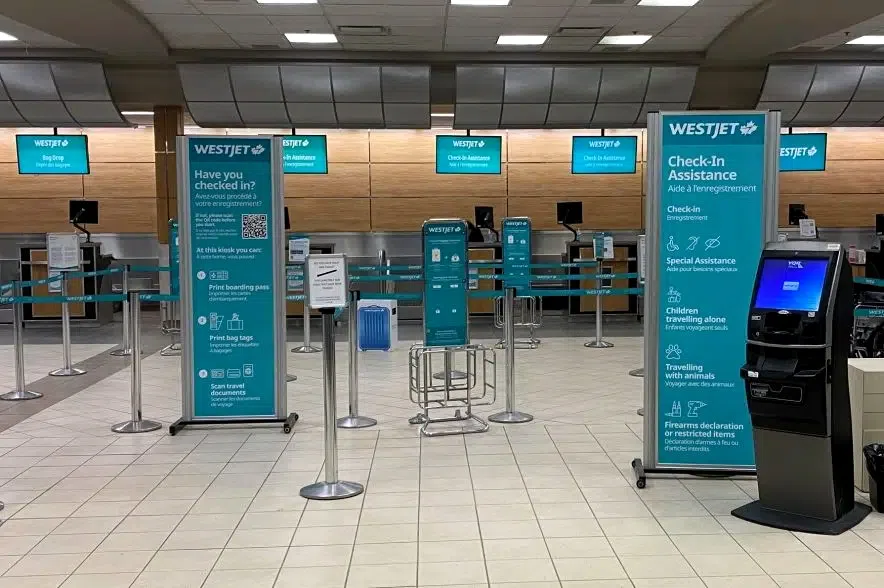
A local advocate in Saskatchewan for those who need mobility devices believes WestJet is making things more difficult than they need to be when trying to accommodate people with disabilities.
Jason Kelln is president of iNRRTS, the International Registry of Rehab Technology Suppliers, which he said also has a mandate to advocate for those who might not be able to for themselves.
The Natarajs are his clients in Saskatoon, and when he heard that 14-year-old Georgia’s powerchair wasn’t being allowed on WestJet flights out of Saskatoon, he contacted WestJet about it.
According to Richard Nataraj, Georgia’s father, his family has taken WestJet flights recently — on the same kind of plane — with no problems. But this time, he was trying to book a family vacation, and he was told his daughter’s 400-lb power chair was too heavy.
WestJet told the Natarajs and 980 CJME, the weight limits have been in place since 2020 and that it’s a safety issue. A statement from the company said consistency in the application of the limits is important as well.
Kelln said he had a conversation with Todd Peterson, Director of Regulatory Affairs & Accessibility with WestJet. He said Peterson explained that all the weight of these chairs is on such narrow wheels and so few points of contact with the plane floor, it causes safety concerns. So, Kelln said he was told WestJet had gone out and gotten steel plates.
“Once they’ve boiled it down to force over area’s pressure, they’re able to carry heavier wheelchairs because they have this plate that is extending the area of pressure over the area of the plane,” Kelln explained, though WestJet didn’t explain when those plates might be installed and in which planes.
According to Kelln, they use similar, if not the same, planes in the U.S., and they’re able to make it work there.
“This kind of, call it a travesty, against people, would never happen in the U.S. They’re held to a much higher standard that, unfortunately, I wish our airlines were held to,” he said.
Despite these issues with space and weight, Kelln said WestJet continues to bring these smaller planes into smaller cities like Saskatoon. He said it shouldn’t be a hard thing to know when a person with mobility assistance books a flight, and to accommodate them, like bringing in a different plane which could hold the chair.
He said WestJet not making the decision is short-sighted and a business decision at the end of the day.
“They’re either bringing in bigger aircraft that can accommodate these chairs, or they’re not,” he said.

WestJet told 14-year-old Georgia Nataraj’s father, her 400-lb powerchair was too heavy to be accommodated on flights out of Saskatoon. (Marija Robinson/650 CKOM)
A recent decision from the Federal Court of Appeal affirmed a Canadian Transportation Agency decision, ordering Air Canada to provide better accommodations for people with mobility aids. The agency’s decision had required Air Canada to either find a comparable flight with a similar route when a person’s mobility aid won’t fit on one of its planes or to swap out the plane on that flight for one that will fit the aid. Air Canada had taken issue with the swap order, claiming undue hardship.
In his letter to WestJet about the Nataraj’s situation, Kelln said people with mobility needs are exploring their world more and more, and they need these complex wheelchairs to do it.
“People in wheelchairs are exploring their world, they’re going to Mexico, they’re going to Europe … They’re all over the world because they can now be part of their world, and they bring more excitement, they bring more to the world that they can explore. And so, by one company’s choice to not help or be part of that they’re really limiting, they’re choosing who they want to be their customers,” said Kelln.
Richard Nataraj said he’d filed a complaint with the Canadian Transportation Agency and with the Canadian Human Rights Tribunal, but hoped WestJet would make changes on its own.