

Sarah Mills: There is still some skepticism about ice skating judging
Canada's ice dancing bronze medal should be celebrated, but Sarah Mills says the stink of Salt Lake City and the judge v...
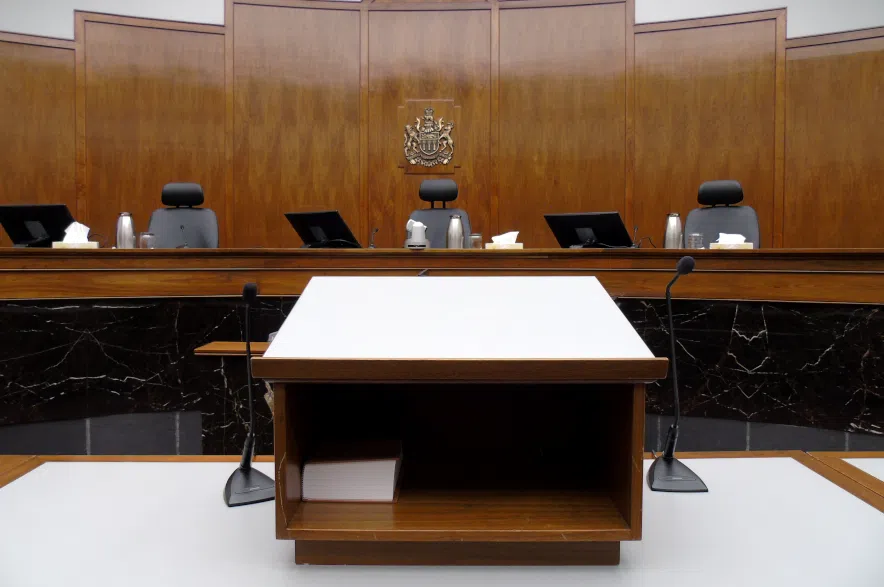
An assault case that started on Facebook Messenger is being sent back for a new trial over the possibility of self-defence.
According to court documents, two men were arguing and trading threats on Facebook Messenger, beginning in 2021 – they didn’t know each other, and the documents don’t explain how they connected on the social media site. The decision also didn’t specify where this exchange happened in Saskatchewan.
Among other things, the first man – the man who ended up being charged – wrote that he was going to “knock (the second man’s) teeth in”, that he would “drive (his) truck through” the second man’s house, and that the second man was “going … to the hospital”.
The second man wrote back (verbatim) things like, “ill legitimately kill you,” “you’re dumbass is buried if you show up,” and “Lime dude you don’t realise what kinda house you’re showing up to. We will just kill you… Lmaooo get ready to die.”
The first man arranged to meet the second man at his house, then drove over in his truck, bringing a baseball bat with him.
When he arrived, the first man messaged the second man, telling him he’d arrived. The second man came outside, brandishing a skateboard.
The second man didn’t throw any hits, but the first man ended up hitting the second man with the bat on the elbow and the back, then left. The second man had to get medical attention and took four to six weeks to recover.
Originally, the first man was charged with aggravated assault, but was found guilty of the lesser charge of assault causing bodily harm. This month, the conviction was overturned by the Saskatchewan Court of Appeal and was sent back for a new trial.
Justice Jillyne M. Drennan wrote that the original judge erred in not considering self-defence as a possible defence in the case.
The first man represented himself at the first trial, and Drennan pointed out that, while he didn’t explicitly advance that defence, his questions of the second man at trial touched on self-defence implicitly, and so the judge should have considered it.
“The trial judge was obliged to address all defences that had an air of reality, even if they were not directly raised by (the first man),” wrote Drennan in the decision.
Air of reality is a legal test to decide whether a kind of defence being advanced has enough evidence to be even considered by a jury.
In the decision, Drennan said it wasn’t up to her to decide whether the self-defence argument would succeed, just whether there was an air of reality to it. She even wrote that its merits might be “tenuous” at first blush.
“I accept there is an air of reality to the argument that, once (the first man) arrived at the (second man’s) residence and the two men physically engaged with each other, his purpose for acting may have morphed from one of aggression to one of self-defence,” wrote Drennan.
She pointed to the fact the second man had threatened the first man’s life, the second man said he had a weapon he was prepared to use, the second man said he believed he threatened the first man when he arrived, and the first man said in messages afterwards that he was only protecting himself.
With the other two judges on the appeals court concurring with Drennan’s decision, the case was sent back for a new trial.