

Sarah Mills: Justin Timberlake's arrest video should be made public
Justin Timberlake is fighting in court to keep his impaired driving arrest video hidden. Sarah Mills says the multi-mill...
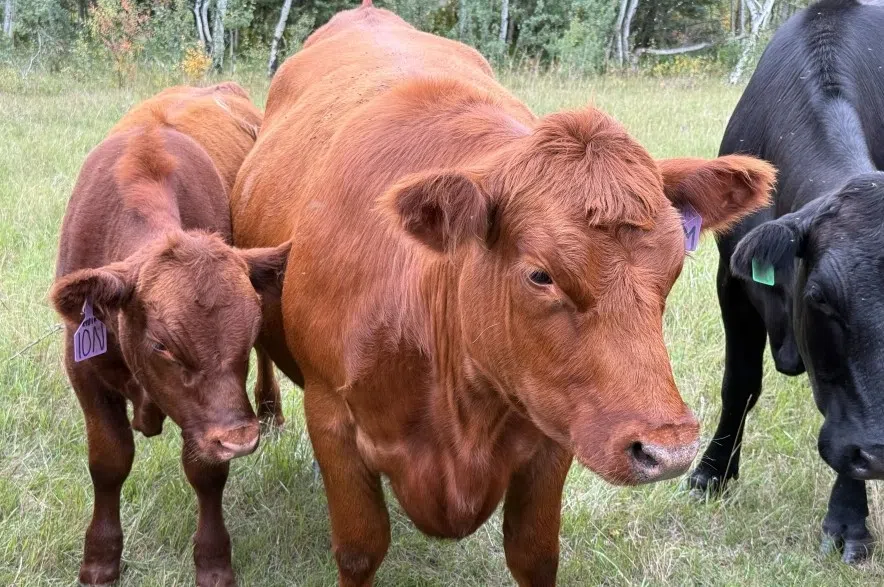
As Saskatchewan producers eagerly wait for the meeting between Premier Scott Moe, Prime Minister Mark Carney and Chinese officials to discuss agricultural trade relationships, discussions about cattle continue to happen at home.
On Monday’s edition of the Evan Bray Show, a panel discussed the concerns around cattle theft through the prairies, where rural crime continues to be a challenge for law enforcement. Chad Ross, chair of governance, government policy and programs for the Saskatchewan Cattle Association in Estevan, Cpl. Owen Third, a Saskatchewan RCMP livestock investigator and Hugh Garrett, east district manager with Livestock Services of Saskatchewan, joined the show to discuss cattle theft in Saskatchewan.
Read more:
The following transcript has been edited for length and clarity.
EVAN BRAY: Can you give us a sense of how serious cattle theft is in Saskatchewan today compared to, let’s say, a decade ago? Is it moving one way or the other?
GARRETT: The theft is more noticeable, especially with the increased value of the livestock. It’s very important at this time to report it to livestock services, so we can follow up on missing animals. But with the value of them, it is obviously more people are looking at theft.
Is this a serious problem, or is this a problem that, while serious, is maybe taking on a bit of a life of its own? Can you speak to reality versus perception?
ROSS: As we look at the spread-out nature of Saskatchewan, rural crime can be a real challenge for law enforcement, and so there are pockets in Saskatchewan that are very concerned about not only cattle theft, but also other theft on livestock operations, so it is serious.
We don’t want to blow it out proportion, but Saskatchewan Cattle Association has long lobbied for the position of the livestock inspector, and we’re very happy that as of 2023 Corporal Owen Third joined us as our livestock inspector and has done a wonderful job in representing us in a place to go in these types of situations.
How did the RCMP come to have a cattle investigator?
THIRD: I’ve been doing this job for just over three years, but prior to that, maybe because of the increased value, producers and people like Chad and associations got together to lobby for one. There’s always been someone in the past doing it, but maybe not to the extent of my involvement.
What this position does for the province is that I’m the support unit for our detachments. So, for example, a file out of Bengough, the Bengough detachment will be the holder of that file. In some situations, it’s livestock services who notifies me of an irregularity, a theft or some sort of cattle issue. And in some cases, I was notified by detachments.
For people not involved in the industry, they’re probably wondering “How is this happening?” Can you give us a sense of the points of contact in which there’s a vulnerability to theft?
GARRETT: With modern equipment, like four-wheel drive trucks, ground-load trailers, steel panels and ATVs, we all use a lot, and it may greatly benefit anyone who may be inclined to harbour or steal animals.
Historically, livestock is a very liquid commodity that is easy to sell without a brand, so I think we are seeing more opportunists. As Chad had commented, we’re spread out more, there are more rural areas and I think, in this case, we are seeing more and more opportunists.
Are there parts of the province that are more vulnerable to this, or operations that are more vulnerable?
ROSS: Operations that don’t brand would be more at risk. If we just think about the value of these animals, people would see the cattle liners that run up and down the road. The value of them is between $350,000 and $500,000 on that particular truck, so there’s a lot of value in these cattle right now, and so it is an attractive means of theft at this point.
When cattle have been reported stolen, what are some of the common things that you’re looking for in terms of how you would go through with an investigation?
THIRD: When it comes to actual cattle theft, what I’ve found, and working with Hugh and his office, is that they’re crimes of opportunity. In those situations, it’s difficult because the cattle are unbranded. We’re looking for some pretty solid evidence to support who the owners are, that sort of thing. It can be difficult, but luckily we’ve had success in a few of those cases and in the last couple of years.
Is it organized? Is it random? Or is it someone in the community who knows there’s a big herd of cattle and is going and stealing? Could these be people from outside the province?
THIRD: As I mentioned, it’s a crime of opportunity; I wouldn’t say it’s people travelling very far. I think it’s loose cattle, no brands, “let’s see if we can get away with it” sort of a deal. We haven’t found that it’s people travelling far distances, as Hugh indicated, with panels, ground-load trailers, that sort of thing. But with that being said, there are the missing reports that come in pretty steadily in the fall once producers learn that they are missing cattle.
GARRETT: There are a lot of a pre-existing civil arrangements, whether it’s a cattle-share agreement, and lots of times they go wrong and turn into a civil matter or fraudulent matter, and that’s where some of these so-called missing or stolen cattle also come into our system. The livestock that strays from their location and are not returned to the owner is another thing where the livestock, which are harboured by the finder, make up the majority of our provincial files, and a lot of time it can be simply just cattle have gone out and, as Owen commented, they fail to return to the proper owner.
Hugh, you work with organizations in other provinces similar to yours. Is this a topic that is being discussed in other provinces as well? Is there any sort of co-ordinated effort to try to curb this problem?
GARRETT: Yes, we do communicate with Alberta and we have Saskatchewan inspectors who actively work in Manitoba at the sales barns, so monitoring the brands coming in is an ongoing thing.
Chad, can you talk about what can help or prevent cattle theft?
ROSS: Hugh and the Livestock Services of Saskatchewan play an integral role in livestock identification, and for those of us located on the east side of the province, Manitoba does not have brand inspection. This makes it an opportunity for theft, or cattle to be sold in Manitoba without brand inspection being required. Now, Hugh and his counterparts work on the Saskatchewan base and some of the auctions over there, which is greatly appreciated, but I think Manitoba is working on bringing on brand inspection, which would help. As well, they’re looking at bringing on inspectors, someone like Owen Third, to help out with that. Saskatchewan Cattle Association and our producers are very thankful for Owen and what he does, and the ability to just give him a call and say “This is a problem we have,” and have some immediate response, and that’s been just wonderful for our producers.
Are the regulations strong enough to protect against theft?
ROSS: I believe the regulations are strong enough on brand inspection to be able to look after the producers in situations of fraud or theft, to be able to use the brand inspectors as a tool for producers, as well as for Owen to use in his investigations.
GARRETT: We do have livestock inspectors from Saskatchewan or working for LSS at all Manitoba-approved markets where cattle are crated. So all cattle that come out of Saskatchewan and are sold at these markets are inspected by a brand inspector. There are approximately 17,000 active Saskatchewan producers in the province each year, and about 14,000 active registered brands. The use of a registered brand remains the most affordable ownership for protection. It’s a cheap tool. It’s $50 for a four-year personal brand and $250 for a 20-year corporate entity brand, so a registered brand is the ownership, meaning livestock bearing that brand is yours until proven otherwise.
THIRD: Working with the LSS, there have been several cases where the fraud or deals gone bad, the brand has saved the producer. So, it’s a cost, but it’s not a big cost. Branding is work, but it’s a way to help yourself when it comes to deterrence.
Here we have a question from a listener: If branding is such an easy way to make sure that your cattle aren’t stolen, why don’t all producers brand?
ROSS: There’s a wide range of operations within Saskatchewan as far as sizes and the amount of equipment they have and how they can logistically handle the cattle. So it could range from 30 head all the way to 1,000 head, and how they can deal with their cattle. Also, purebred operations may not want to put a brand on a purebred animal. One thing I really want to mention to your audience is that our producers have come a long way as far as care of our livestock, and we administer a pain medication to the animals as we’re doing these procedures to our animals to take away the pain.
Another question here from listeners: Is there a specific time of year when we see a spike in cattle theft?
GARRETT: The fall is the most common time for the losses to show up. A lot of the livestock are over a vast area and aren’t counted every day. And in the fall is when the official count will be done, and that may be the first time they will notice if a loss has occurred.
What about the technology? When we travel, we use AirTags to track our luggage. Is there something like this available for cattle?
THIRD: The technology is available, but it’s quite expensive. I know, in talking with producers in the south, near the border, there are companies that do have technology available, but I’m not sure how well it would stand up in our climate. I think what they recommend is 15-20 per cent of the herd to be tagged with these tags.
For ranchers with hundreds of head of cattle, what is the practical way these producers keep track of their herd?
ROSS: A lot of it is just manually counting. In our operation, we have managed a grazing system to manage our grass, so we actually move our cows every three-and-a-half days, which allows us to get boots on the ground and see them every three-and-a-half days. There are some situations where producers will turn them out for the summer and not be able to see them, whether they’re in the bush or whatever, and that’s where it gets tough.
But technology is coming. I hosted a technology day with researchers here on the ranch this past August to try and develop ways to add technology to the beef industry to help us in these types of situations, whether it be tags, drones, GPS or whatever, and I believe it’s coming. The challenge we’ve had in our industry over the last 25 years is that margins have been tight. Margins have been tight for our producers, and so spending extra money on technology just wasn’t in the cards. So I think as we get more profitable in our industry, and it’s much needed in the cow-calf side of our industry, I think these types of technologies will be used.
We understand the impact cattle theft has on the actual producer, but Hugh, can you speak to the greater impact on society that this crime has?
GARRETT: The financial cost is the major strain on it, with animals being between $3,000 to $7,000 depending on the commercial end of it, so we also see a lack of trust amongst producers when cattle are missing.
To close things out, if you could make one change or offer a piece of advice, what would it be?
ROSS: I would like to say, on behalf of our producers and Saskatchewan Cattle Association, I appreciate the RCMP and having Owen there to be able to call, and if there are problems for our producers, go ahead and reach out to us or to Owen and try and get that help.
GARRETT: I wanted to emphasize the importance of the branding of livestock for identification purposes and make sure your manifests are correctly filled out when transporting animals. Ownership handshake deals were a good thing in the past, but people need to do their due diligence and have contracts made out. I’d also like to thank Owen and the relationship we have with the RCMP.
THIRD: The advice I’d give, like Hugh and Chad both said, would be registering a brand, keeping good records and checking your cattle often, which isn’t always easy, but making sure that you know you got cows there. Reporting anything if you do identify you’re missing cattle. Let LSS know. They always let me know of any missing reports, so I keep track of them as well. If someone is coming to buy cattle from you, make sure you have a manifest.
The only other thing I’d like to say is just a shout out to everyone, to all my partners that I deal with. It makes the job a lot easier. Stock growers, cattle associations, the Ministry of Ag, LSS, and our detachments. They’re the ones that are, in some cases, taking the files. There are a lot of great members out there that I work with, and producers. We haven’t talked about the good producers. There are a lot of good producers out there that work with their neighbours and make our job easier.