
Sarah Mills: There is still some skepticism about ice skating judging
Canada's ice dancing bronze medal should be celebrated, but Sarah Mills says the stink of Salt Lake City and the judge v...
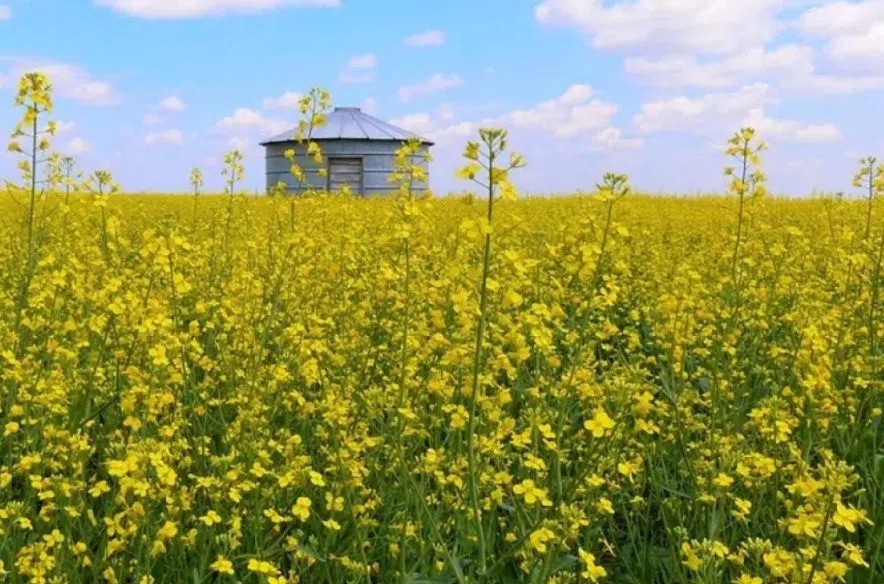
Different groups representing Saskatchewan farmers are eagerly awaiting the results of Prime Minister Mark Carney’s upcoming trip to China surrounding canola tariffs.
Carney is the first Canadian prime minister to visit China in eight years to talk tariffs, energy, and international security. He will arrive on Wednesday.
Read more:
China has imposed a nearly 76-per-cent tariff on Canadian canola imports, and a 100-per-cent levy on canola oil, meal, and peas.
Dean Roberts, the board chair for Sask Oilseeds, said the group has been calling for this meeting since the tariffs were first imposed.
“I’m eager to find a resolution, or hear of a resolution,” he said. “But at this point, I’m just trying to manage my expectations.
“It’s been a long road to get to where we are, and we don’t know what we’re going to get next week.”
Roberts said he’s heard from frustrated farmers since the tariffs were put up.
“This was a federal government trade policy that caught our farms in the crossfire, and we’re paying the price,” he said.
Carney did meet with Chinese President Xi Jingping in October, where they had a sideline conversation at the Asia-Pacific Economic Cooperation summit in South Korea.
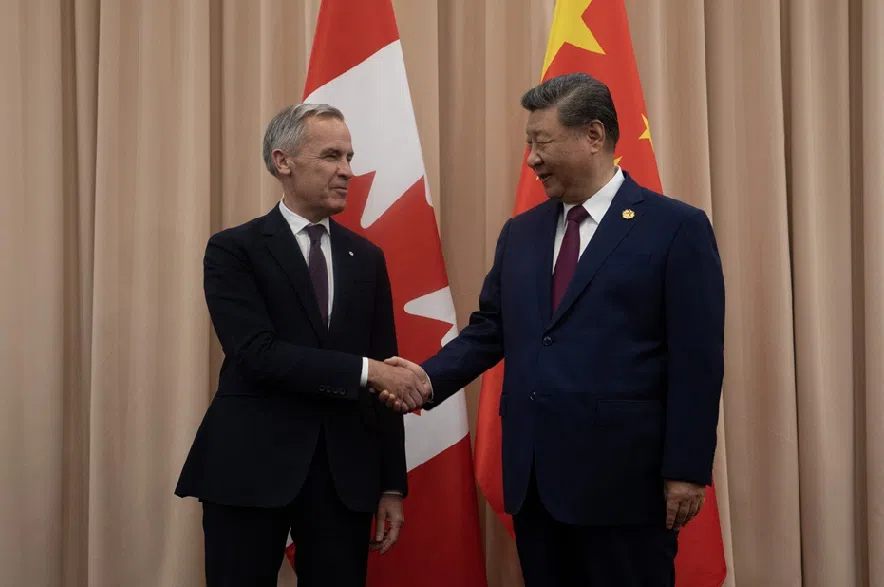
Prime Minister Mark Carney shakes hands with Chinese President Xi Jinping at the start of a meeting in Gyeongju, Friday, Oct. 31, 2025. (THE CANADIAN PRESS/Adrian Wyld)
Bill Prybylski, President of the Agricultural Producers Association of Saskatchewan, said the meeting is a step in the right direction.
“I think producers are pretty anxious to see some sort of some sort of movement on that,” he said. “There’s been really nothing that has been of giving us any hope until now with the Prime Minister going over there.”
Prybylski said the longer these tariffs are imposed the lower it will sink producers’ bottom lines.
“I think majority of producers are finding ways to pay their bills for now,” he said. “But it’s certainly frustrating, the uncertainty for one thing, and just because of some political issues, our commodity prices are significantly decreased from where the theoretically should be if we were in a normal marketing situation.”
Most of the province was able to pull off fairly decent yields, Prybylski said, which he believes helped producers protect their finances against tariffs.
He hasn’t been satisfied by the federal government’s supports for the agriculture sector since the tariffs have been imposed.
“The automotive (and) the steel and aluminum sectors, whenever there’s announcement of tariffs there seems to be immediate action from the federal government,” Prybylski said.
“When it comes to the agriculture sector, it seems like we’re kind of last to the to get any action.”
Roberts said producers are looking at “eye watering” fertilizer prices, and need to know if they will face costs related to tariffs on top of other costs for seeding.
“Fertilizer purchases are being made, seed is booked and being purchased,” he said. “We need these tariffs resolved before seeding so we can get some certainty on what we should or shouldn’t be putting into the ground for the coming year.”
Both Roberts and Prybylski said they will be watching the outcome of the meeting closely.
Read more: