

Murray Wood: Saskatchewan is winning the race to the bottom on minimum wage
An increase is coming for Saskatchewan's minimum-wage earners this fall, but Murray Wood says it will ensure they contin...
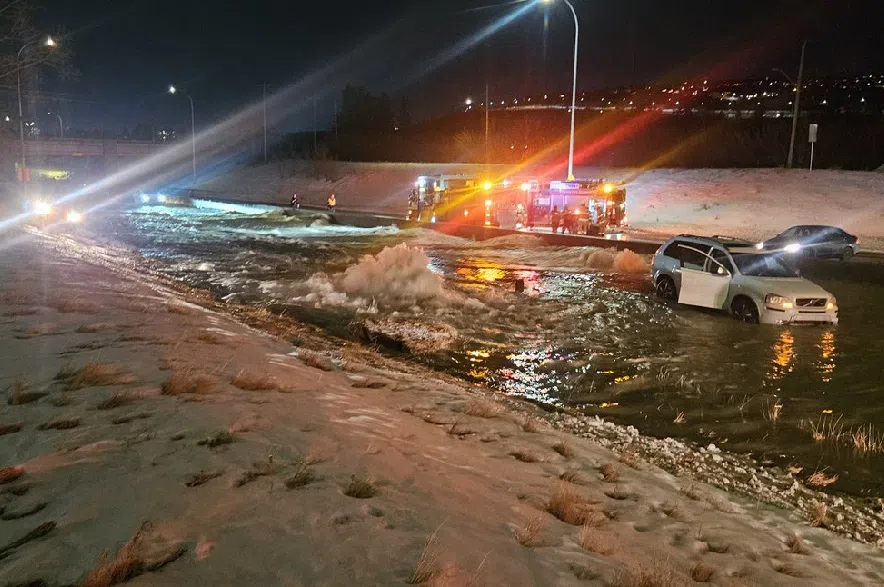
The City of Regina says there are several reasons why a major disruption in the water supply like the one seen in Calgary is unlikely to happen in the Queen City.
On Dec. 30, Calgary’s Bearspaw South Feeder Main suffered its second catastrophic failure in 18 months, sending water gushing from the road and leading city officials to urge Calgarians to conserve water.
Read more:
The concrete pipe carries close to 60 per cent of Calgary’s drinking water from a treatment plant on the western edge of the city to reservoirs located around Calgary. While it’s out of service, Calgary has to mostly rely on its second, smaller treatment plant in the city’s southwest.
In Regina, water treated at the Buffalo Pound Water Treatment Plant, located near Moose Jaw, travels 56 kilometres by pipe.
Carolyn Kalim, the City of Regina’s director of water, waste and environment, said there are many differences between Regina’s system and Calgary’s.
“We have two supply mains that come in, so we’ve got some redundancy there. If one were to fail, we’ve got another one,” Kalim said.
“Additionally, our pipes are a different type of material. We have steel pipes, which are not prone to the same type of catastrophic failures. They’re more likely to get small, little pinhole failures.”
She said the pipes are also regularly inspected.
“They’re showing themselves to be in good condition,” she explained.
“We’re taking regular work to ensure that we’re always looking to extend the life of those pipes, to continue to serve us into the future.”
While metal pipes can be prone to corrosion, Kalim said the city has been successfully preventing the issue through cathodic protection measures.
The older pipe dates back to the 1950s. A second, larger pipe was installed in phases between the 1980s and 2000s. Kalim said research indicates the lifespan of the pipes could be as long as 120 years.