
Wood file: Canada can lose occasionally and still be No. 1
Canada was snakebit in the gold medal hockey game, and sometimes, even when you dominate the other team, you come up sho...
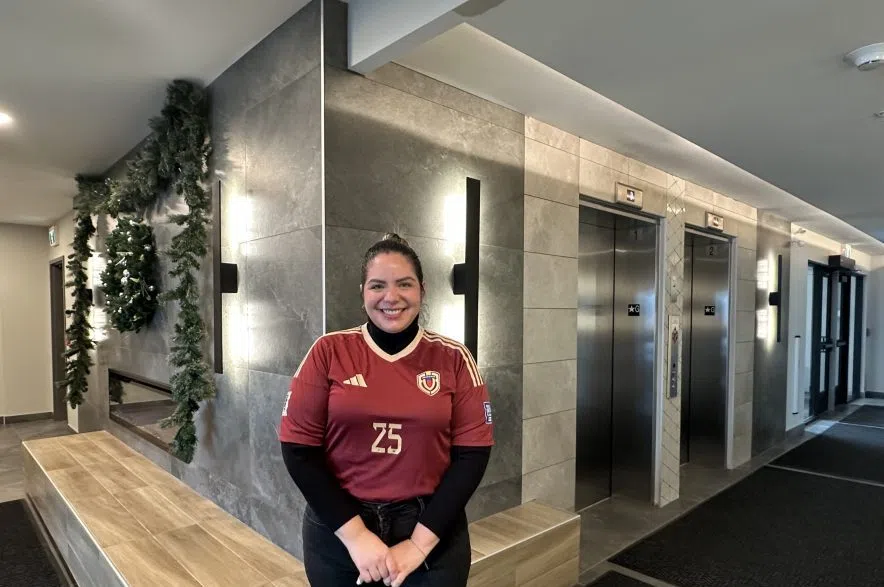
If Zusana Gavidia’s holiday flight to Venezuela hadn’t been cancelled, she would have been in Caracas over the weekend, when the U.S. launched military attacks on the country and captured its president.
“It was a good moment to not go to Venezuela,” Gavidia said, noting how close she came to being in the country during an extremely dangerous time. “That feels like something lined up.”
Read more:
The Spanish language interpreter lives in Saskatoon but still has family back in the Venezuelan city. She says they’re okay and haven’t been hurt because of the attacks, but they’re anxiously — and cautiously optimistically — anticipating what could come next.
Born and raised in Venezuela, Gavidia moved to Ecuador in 2018 for four years to leave behind the difficult circumstances in Venezuela her home country, then eventually came to Canada.
“That was too much,” Gavidia said.
“I realized that there was a very difficult situation to reach even your goals … to have a nice job, to have your own apartment … even renting. Independence for a young adult, it was almost nonexistent,” she said.
One of Gavidia’s friends was killed during some of the major protests happening in Venezuela just before she moved.
“I have a very little cousin there, and he is very sad because he cannot go to the park alone. He cannot have this normal childhood that I see (children) here having,” Gavidia lamented.
She called Canada “calm, relaxed, organized and safe,” which was important to her.
Since the Saturday attacks by the U.S. on Venezuela, Gavidia is talking more frequently than her daily check-ins with her family. Gavidia’s aunt’s home in Caracas hasn’t had power since the attack, but her family has otherwise stayed safe.
“I am afraid of their safety, but they’re safe,” she said, remembering her physical reaction to the strikes. When she first found out about the attacks, Gavidia said her body began to shake.
There was suspicion that something might happen at the end of last year, given the significant military movement around Venezuelan territory that was happening in November and December.
However, much like now, there has been little reliable information shared about the events in Venezuela.
Gavidia said the media in her country has long been manipulated by those in power and suggests the only information she trusts comes from first-hand sources in the country, like her family.
But even they don’t know what might happen next. Gavidia said her family is staying home for their safety right now, not knowing what they are allowed or supposed to do.
She has heard from family that the feeling is that the streets in Venezuela are almost “too calm” at present.
Despite the little reliable information, Gavidia said she and other Venezuelans who she has been connecting with are cautiously optimistic about what could come next. She said the weekend attacks were significant.
“It’s a big step … I don’t know if forward or backward,” she said, though she thinks that the removal of Venezuelan President Nicolás Maduro Moros is ultimately good for the country.
“We don’t know exactly what is going what is coming for Venezuela in the next few days, weeks, or even months, but for sure, we hope (for) the best, and (if we’re lucky), we’ll have our democracy restored because we lost it so many years ago … We’re seeing a little bit of light, or at least that is my opinion, or how I feel, but I appreciate that a lot of Venezuelans out there feel the same.”
Gavidia said it’s scary to not fully know what is happening or what might come next.
“Could be good, could be bad, we don’t know,” she commented. “We only want to have the opportunity to restore our country to rebuild what is have been destroyed for so many years, and that’s a little bit of an opportunity, so let’s see if it will be continued that way.”
For now, Gavidia is anticipating the continuation of the transition government while she and other Venezuelans around the world wait to see what future comes about for the country.
Calling this a “special moment” for Venezuelan people to be seen and heard, Gavidia encouraged openness from people who don’t share her heritage to still share their thoughts and opinions on the still-unfolding situation.
“I will maybe say that if you are not Venezuelan, you have your total right to share your thoughts and your opinion. That’s why I love this country, because you are open to say whatever you want, of course, from respect,” she said.
“But at least talk with one Venezuelan and ask them, What do you feel, what do you think? How was your life in Venezuela? What (have) you left? What do you miss? And you can have a little bit of context depending of the person.”
In Gavidia’s case, she misses the family members she cannot visit and the places she says she won’t be able to visit again.
Gavidia hopes that people in Saskatchewan will be understand the basics of what happened over the weekend: that the U.S. government’s military operation led to the removal of the Venezuelan president, who is set to stand trial in the U.S. and a transition government is to take over Venezuela in the meantime.
She anticipates the U.S. will have some say in the next steps for Venezuela and this could result in rebuilding the country’s oil industry.
After nearly three decades of control over Venezuela, and repeated please for international intervention, Gavidia is not downplaying the potential impact this could have on the country’s future.
“This is huge, that this is beyond ‘kidnapping’ someone or extracting someone, and I’m quoting different media titles out there. This is more than that. This is beyond that. This is democracy, this is integrity, this is … national identity.”
Read more: