
Wood file: Canada can lose occasionally and still be No. 1
Canada was snakebit in the gold medal hockey game, and sometimes, even when you dominate the other team, you come up sho...
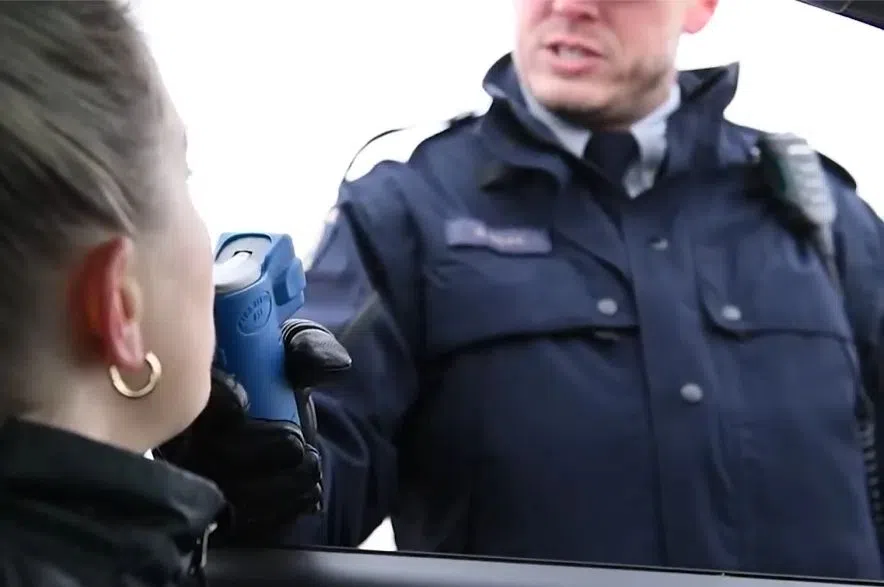
A criminal defence lawyer is raising concerns about civil liberties and fairness as Saskatoon police move ahead with mandatory alcohol screening.
Kyla Lee, a Vancouver-based lawyer who specializes in impaired-driving cases, said the policy allows police to demand a roadside breath sample from drivers.
Read more:
“What that means is anybody who’s pulled over by the police is going to be asked to provide a sample into a roadside breathalyzer,” Lee said during an interview on the Evan Bray Show. ” The police do not need to have any grounds to ask the person to blow.”
The Saskatoon Police Service began mandatory alcohol screening on Jan. 1, limiting its use to lawful traffic stops conducted by traffic enforcement officers and Combined Traffic Services Saskatchewan. Police said the rollout was not intended to involve random pullovers solely for testing.
“Obviously, it’s got to be a lawful traffic stop,” Sgt. Raymond Robertson said in an interview with CKOM, adding the driver must have “committed some kind of traffic offence, whether that be disobeying a red light or stop sign or speeding.”
Robertson said the screening process was designed to be quick, noting that the breath test itself takes only a couple of minutes once the demand is read and the device is ready.
Lee said her concern was not with the goal of reducing impaired driving, but with how the law removed long-standing protections against search and seizure.
“I don’t agree with the constitutionality of it,” Lee said, adding that the law allows police to conduct a search without individualized suspicion.
Mandatory alcohol screening is authorized under amendments to the Criminal Code of Canada that came into force in 2018. The law allows officers who have an approved screening device to demand a breath sample without first forming suspicion of impairment. The approach is already used elsewhere in Saskatchewan, including in Regina and by the RCMP.
Lee pointed to a split decision by the Saskatchewan Court of Appeal, which upheld the law earlier this year while acknowledging it infringed on Charter rights. She said that the division left the issue unsettled and likely to be considered by the Supreme Court of Canada in the future.
Beyond constitutional questions, Lee said the policy raises practical concerns for specific drivers. She said people with breathing difficulties, lung conditions or other medical issues can struggle to provide an adequate breath sample even if they are sober.
“The real negative of it is that it’s also a criminal offence to refuse or fail to provide a sample,” Lee said.
Robertson said refusal at the roadside could lead to a Criminal Code charge. “If an individual does refuse to participate, and does refuse to provide a sample of breath, they can be charged with refusal under the Criminal Code, and then they’d be arrested,” he said.
Under federal law, a refusal conviction carries the same penalties as impaired driving, including a mandatory minimum $2,000 fine, a one-year driving prohibition and a criminal record.
Lee said that reality leaves drivers with little choice in the moment.
“The only advice we can give is to comply,” Lee said. “You shouldn’t try to adjudicate the lawfulness of the demand yourself. Leave that to the lawyers.”
Police said mandatory screening adds another tool to improve road safety and said success would be measured by outcomes such as fewer serious collisions and fatalities.
For Lee, the debate reflects a broader tension between public safety and individual rights.
“It’s hard to argue against keeping impaired drivers off the road,” Lee said, “but that doesn’t mean we shouldn’t be asking hard questions about how far police powers should go.”