
Sarah Mills: My World Cup ticket hopes are dashed once again
Sarah Mills just received another email telling her she hasn't been successful seeking World Cup tickets. The dream is d...
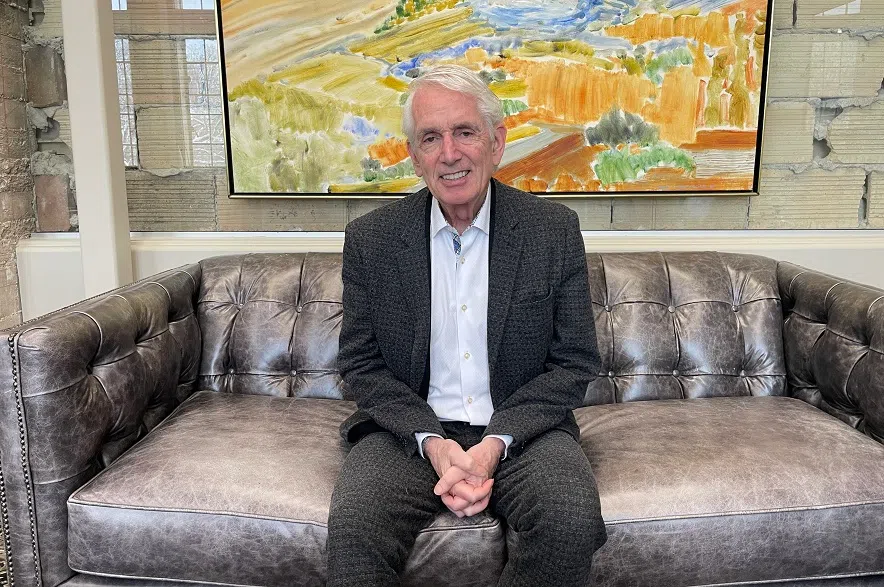
For the past 10 years, Peter Stoicheff has held the title of president and vice chancellor of the University of Saskatchewan, but that comes to an end in just a few days.
On Dec. 31, Stoicheff will finish his tenure and his successor, Vince Bruni-Bossio, will take over the role at the start of 2026.
Read more:
During his time as president, Stoicheff dealt with a pandemic, Indigenous misrepresentations and financial hardships at the university. But despite all the challenges, he said he’d do it all again.
Looking back, Stoicheff shared hopes for a legacy defined by a commitment to truth and reconciliation, research excellence and instilling pride in alumni decades after graduation.
The following transcript has been edited for length and clarity.
MARIJA ROBINSON: Your last day is coming up pretty quick. How are you feeling right now?
PETER STOICHEFF: It’s mixed feelings, for sure, because I’ve had a wonderful time in this position. It’s been challenging at the same time. I think the average length of time that a president serves in this country is just over four years. I’m at the 10-and-a-half-year point, and it does begin to take a toll. So in that sense I think it’s the right time for me to leave, and it’s a good time for the university for me to leave. I have a wonderful successor coming in to serve as president of the university, so I think all of that’s really good. But I love the university, and when you’re in this role and you leave it, it’s not like they find something else for you to do. I feel like I’m stepping out of a community that I’ve been in actually for 40 years, because I started here as a professor in the English department in 1986. By next summer, it will have been a full 40 years, so that’s hard, but that’s life. Lots of people finish jobs after a long career in them and probably feel exactly the same way.
You were an English professor and then you were the dean of arts and sciences. Why did you decide to be president?
STOICHEFF: Back then, the circumstances were such that my predecessor as president was only in the role for 22 months and then was let go, so I knew that the university needed some effective leadership, and I thought I might be able to provide that. I care a lot about the university. I was very happy being a professor in the English department. I love working with students, graduate students, undergraduate students. I really enjoyed all the research and scholarly work I was able to do. I really enjoyed being dean of the College of Arts and Science, and when this position opened up I was about ready to hopefully begin a second five-year term in that role, so in a way I just felt I’ll serve the university wherever I can be of the most use. But others also suggested that I apply for the presidency position. I wasn’t sure I could be that effective at it, so I applied with some trepidation, but I’ve received a lot of support all the way through my 10 years that allowed me to be as effective as the history books will or will not say I was. The university was experiencing a difficult situation at the time, and I felt that I could contribute to remedying that.
Did you ever expect that you’d be in the role for 10 years?
STOICHEFF: I did not. I don’t really know why, but intuitively I was assuming that I’d be in for five years. These positions run in five-year terms, and if you serve longer than five years there’s a process by which you must actually be renewed. Doesn’t happen automatically. So I did assume that if I was lucky I could serve for a full five years. I didn’t really foresee looking beyond that. One of the things that happened was right at that point – that would have been around 2020 – when I was pondering whether or not to serve a second term, COVID hit. You definitely don’t step out at that point and leave the university in the lurch. It needed if not good leadership, at least consistent leadership right at that time.
Can you talk to me about having to lead the university through a pandemic? What was that like to be at the helm of that ship?
STOICHEFF: That was difficult, and anybody who had anything to do with leading anything through the pandemic would say exactly the same thing. The second thing they’d say is there was no sort of road map. You didn’t find a book on it. There wasn’t one. Nobody had really done it before. Although there are things that we were able to learn from the Spanish Flu epidemic and all sorts of other things in terms of how this university handled it and how other organizations would handle similar things. But that was tough.
The thing that I learned from that was that when the chips are down, this university, all parts of it, all people associated with it, really work well together and want to work well together toward a common goal. Although that’s probably just a technicality because all these things happen very fast, we were the first university to have a vaccination policy. That was very controversial. We had to make a lot of extremely difficult decisions during the pandemic. The first one being “We’re not going to close the university, but we can’t have anybody at the university,” so we had to switch all of our teaching for many, many, many thousands of students to online within about four or five days. There were decisions we had to make there and carry out that were unprecedented and extremely difficult, but the other thing I said was “Let’s not let this all go to waste once it’s over. Let’s learn from it.”
Over the course of these last 10 years, what are some of the things that you learned?
STOICHEFF: This is a university that’s capable of asking itself “What are the largest challenges that the world is facing today? Given the expertise that we have, what are some of those challenges that we can help the world find solutions to?” And those were some of them. So our ability to be outward facing, to be socially accountable, to do the kind of work that the people of this province and country, and in select areas around the world, needed, was very inspiring and something that I learned a lot about the university as a result of.
What was your greatest challenge in this role?
STOICHEFF: The pandemic was definitely one. Another was the whole issue of Indigenous identity verification, and we had incidents here where individuals on the campus or working at the campus were involved in misrepresentation. That happened with us and to us, if you will, maybe first, or we were among the first in the country to experience that. How to handle that appropriately and not only courteously, but with rigour and with care, that was really a challenge. Talk about something that didn’t have a road map – like the pandemic, that didn’t have a road map either.
Our largest funding source, like any universities in the country, is our province, and provinces have many mouths to feed. The demands on their health funding are increasingly enormous. There’s the social security net that must be provided in a caring society and so on, so financial challenges, including one that we really experienced in 2016 in a budget that was my first or second in the position, were really, really tough. But, I have to say in the same breath, since then this provincial government has supported this university.
What do you think your legacy will be?
STOICHEFF: Although it’s a long journey, potentially without end – and Indigenous people will be the ones to say whether we’ve been successful or not – I know that we have moved ahead on that road and in that journey (towards truth and reconciliation). I think that will be part of the legacy of the university while I’ve been president. The international rankings that we leapt up in more than any other Canadian university over the last five years, I think, will be part of it, and the research success that we have experienced that’s publicly acknowledged and celebrated, not just in this province, but across the country and in select ways around the world, I think that will be part of the legacy, too. If we’re going to say we’re aspiring to be the university the world needs, you want to make sure you’re out there in select places around the world building that profile, and I think that will be part of the legacy, too.
When I boil it all down, I really only had one goal, which was that people would feel proud about the University of Saskatchewan if they were citizens in this province and thought about the university that’s named after their province. One of the most wonderful stories I’ve heard over my 10 years, and I heard it recently, was an alumnus who received a philosophy degree from here. (He) went on to be extremely successful in the business world and also earned an MBA at Harvard, (and) told me that for years, he mentioned his Harvard degree, and now mentions his University of Saskatchewan degree –and sometimes exclusively mentions his University of Saskatchewan degree. In other words, he’s really proud. In the end, I hope that’s a legacy during my time that people inside and outside the university feel really proud of it.
What do you think the future holds for this university?
STOICHEFF: I think great things. I think a foundation is set for financial sustainability, and that’s really, really important. I think that confidence level is there, the research excellence is there, our ability to attract top talent from around the world at the faculty and research faculty level is there. We received, over the last four years, six Rhodes scholarships. Only 11 are given in the entire country (and) 98 universities are eligible for them. We were receiving either one, or at times, two a year out of those 11 across all of the universities eligible in the country. There’s no other university that’s done that –received two – except the University of Toronto. They have four times the number of students to choose from, so we have students who are as excellent as any students on the face of the earth.
What does the future hold for you?
STOICHEFF: It’s been a transformative decade. For us, positive, (but) for a lot of universities, anything, but. The geopolitical consequences for universities have been dire in many places, so that all boils down to the fact that I do feel a responsibility to write some sort of account of the last 10 years through the lens of this university, but that really takes a bird’s-eye view of what’s going on at universities in this country and around the world.
So we should expect a written report?
STOICHEFF: I never want to quite say a book, because that depends on a publisher accepting it, right? But, I do feel an obligation to do that. I think I would, anyway. But it’s been a decade of such enormous change and facing such enormous challenges, and a decade that I hope people think has been, on the whole, a very positive one for the University of Saskatchewan, so I do want to write all that up.