

Murray Wood: We should defend Ukraine because it is the right thing to do.
Four years of Russian barbarism after the invasion of Ukraine seem to have left some Canadians less concerned about that...
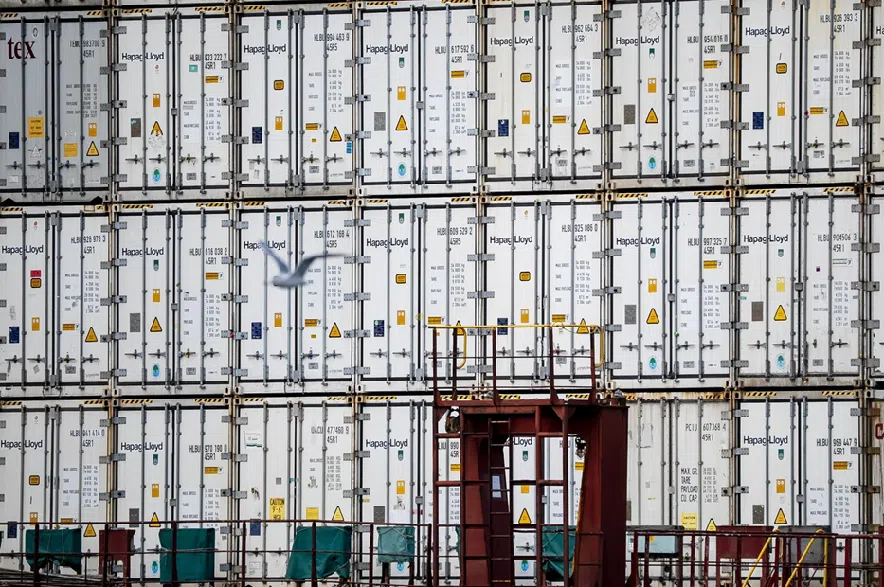
MONTREAL — More than a year after its rollout, an online portal for collecting taxes on goods transported into Canada continues to cause headaches for shippers — from red tape tangles to periodic outages — with potential ripple effects for consumers, all amid a costly trade war with the United States.
The federal government’s $706-million digital platform for paying duties came online in October 2024 in an effort to streamline the old, paper-based process that customs officials relied on for decades.
Read more:
The Canada Border Services Agency says the portal — known as the CBSA Assessment Revenue Management system, or CARM — smooths out cross-border transport by providing more than 200,000 shippers a user-friendly site for paying duties and submitting documents, all while shoring up enforcement.
But 14 months on, feedback suggests the transition hasn’t gone smoothly for everyone at a time when trade uncertainty is gnawing away at bottom lines and pushing prices up for consumers.
Many of the complaints revolve around registration and support delays, while others relate to glitchiness in the digital system.
Enrolment now takes two weeks instead of a couple days for Canadian companies — and up to two months for importers based abroad, according to member reports to the Canadian International Freight Forwarders Association.
“We really are at a sort of breaking point,” said Michelle Auger, director of trade and marketplace competitiveness at the Canadian Federation of Independent Business. “We need to see some changes.”
Prior to CARM, a customs broker acted as a kind of accountant for shippers. They would take care of registering importers with the government and make sure they submitted the proper documents and complied with sector-specific rules. They also posted a cash deposit or bond on behalf of importers and collected duties from them to be passed on to Ottawa.
Some of that can still happen. But the burden is now higher for importers, who must now register themselves and, if they choose, delegate some tasks to a broker.
“It’s not as easy as, say, signing up for Amazon Prime where you click a button and suddenly you register,” said Janine Harker, president of the Canadian Society of Customs Brokers.
Importers unfamiliar with the sign-up process “could easily be led down a rabbit hole” that leaves them mired in administrative limbo and unable to carry out shipments, she said.
Any costs incurred by shippers due to border holdups or time spent navigating customs hurdles could trickle down to the customer, industry players said. There could also be implications for competitiveness and consumer choice.
“I think it’s hard on the Canadian economy when Canada is not looked on as a place where it’s easy to do business. And right now, CARM is not necessarily giving the image of Canada as a place that’s easy to do business,” Harker said.
However, the portal is navigable enough that the CBSA saw a nine per cent year-over-year increase to $39.2 billion in duties and taxes assessed between Jan. 1 and Oct. 30, even after accounting for Canada’s retaliatory tariffs against the U.S., said agency spokesman Luke Reimer in an email.
Some 202,500 businesses sent more than 41 million shipments — one truckload might contain multiple shipments — in that period. The figures show that CARM has “strengthened Canada’s economic position by standardizing the collection of duty and taxes on goods entering the country and thereby reducing lost revenue opportunities,” Reimer said.
Cory Carson, a vice-president at customs broker Carson International, said the dashboard has many helpful components, but that deployment has been “frustrating.”
Importers located outside the country need a federally assigned business number to sign up. “The delays are up to a month,” he said.
“I’m not a CARM hater … but 30 days is a long time when supply chains never sleep.”
Frequent outages have also impeded access to the portal.
Some 50 outages — most of them unscheduled — plagued the system in its first year, according to the Canadian International Freight Forwarders Association.
On occasion, those glitches have caused days-long shipment delays, with guards forced to process paperwork by hand and goods stored in short-term warehouses where they can spoil or get lost, according to I.E. Canada, which represents importers and exporters.
The freight forwarders association said those holdups are adding “serious cost increases” to the supply chain that get passed down to consumers.
“Unfortunately, these constant outages are now an inherent flaw of CBSA’s customs systems,” the industry group told Public Safety Minister Gary Anandasangaree in an Oct. 3 letter.
Even United States Trade Representative Jamieson Greer took note. In its Feb. 28 report on foreign trade barriers, his office said the CBSA “had made no other alternatives available for paying duties and taxes,” in spite of the outages.
The CBSA said the system has been up 99 per cent of the time since last December. “We are constantly looking for ways to ensure we can maintain this level of system stability,” Reimer said.
The agency also recently held consultations on allowing businesses to use their customs broker’s business number to register on the portal, rather than waiting weeks to be assigned their own, he said.
As for registration more broadly, “onboarding can be completed in as little as 10 minutes with the required information at hand,” Reimer said. The agency encourages importers to consult guidance documents and contact the helpdesk.
However, getting a human on the line can be hard.
“The helpline is still a major pain point,” said Auger. Shippers must submit a help request through the dashboard and then await a call from the client support desk that can take weeks to come in, according to industry groups.
“Communication could be so much better,” Auger said. “There’s no quick way to get answers.”
This report by The Canadian Press was first published Dec. 15, 2025.
Christopher Reynolds, The Canadian Press