

Sarah Mills: You never forget the memories of your first teacher
Teacher Appreciation Week has wrapped up in Saskatchewan, but Sarah Mills says the memories of the classroom, especially...
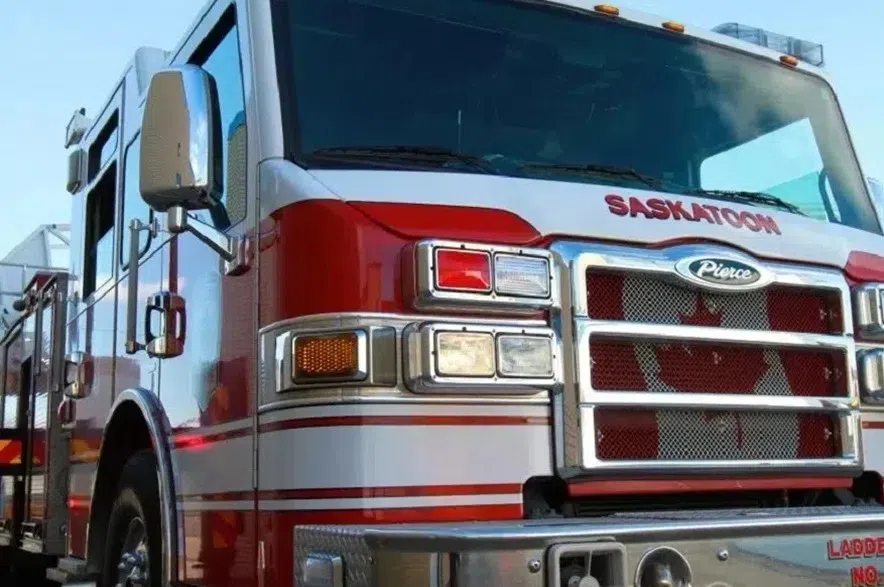
Everyone across the City of Saskatoon prepares for winter, even the Saskatoon Fire Department.
While freezing temperatures were delayed, thanks to mild November weather, Rob Hogan, Deputy Chief of Operations and Emergency Communications with the Saskatoon Fire Department, said the crew is always winter-ready.
“We train in the environment that we work (in). We just completed a whole cycle of thin ice training in November,” he said.
Read more:
Other preparations are much simpler.
“Crews are a lot more careful when they’re out on calls, you have to travel a little bit slower,” Hogan said.
“We’re tending to a number of car accidents when (crews) are out at calls, they have to make sure they’re covered up better so they don’t get cold (or) frostbite.”
Hogan said so far this winter, he hasn’t noticed an increase in car accidents due to snowy and icy conditions.
“I think it’s been an average year, a normal number of collisions because of the weather,” he said. “As (people) get used to driving in the icy conditions, they get better at it. The city has been really good this year and in past years of getting out with sanding trucks and the plows.”
But the city can’t reach every intersection right away after a snowfall; that’s where the Fire Department can lend a hand.
Hogan said crews are in constant communication with the city about icy intersections or areas that have seen a high number of collisions due to the conditions.
“If we see that we are having multiple accidents at one intersection or if we’re at the scene of an accident that’s quite slippery, quite often we’ll call up the city yards,” he said.
Hogan said fire equipment on the trucks has been updated, so not much extra work goes into preparing the firetrucks for the winter season.
“Most of our trucks are pretty much equipped all year round,” he said. “We used to years ago fill the pump with antifreeze, we don’t need to do that anymore.”
However, some of the typical summer maintenance, like washing the exterior of the truck, is put on the back burner during the winter.
“We don’t wash our trucks as much because the roll-up doors freeze shut.”
Hose maintenance at the scene becomes more of a focus point during the winter as well, according to Hogan.
“We have to keep the water flowing all the time,” he said. “If you’re ever around or near a fire scene, you’ll see the hoses, especially when it’s really cold out there’s always water flowing out of them.”
The cold weather can also impact some of the equipment firefighters use when they’re attending a scene, like the air tanks.
“That does affect our breathing air, because it’s compressed air,” Hogan said. “So as it gets breathed, the regulators freeze up a bit, so it creates some problems there; we tend to be really quick with our crews on scene.”
Hogan said fire crews don’t get specific winter gear, but extra gear to keep them warm is provided each year.