
Sarah Mills: More money for Canada Post is not the way to go
Sarah Mills says another $1 billion for the public mail carrier is repeating madness and not conducive to the long-term ...
Around 1,250 to 1,350 disabled students in Saskatchewan were excluded from attending school full time for the 2024-25 school year, according to a recent report from Inclusion Saskatchewan.
The report released on Tuesday by the advocacy organization, based on freedom of information data, shows that one in nine students with intensive support needs were excluded from school last year either part time or full time.
Read more:
This exclusion was largely due to funding decisions, lack of staffing and behavioural support gaps.
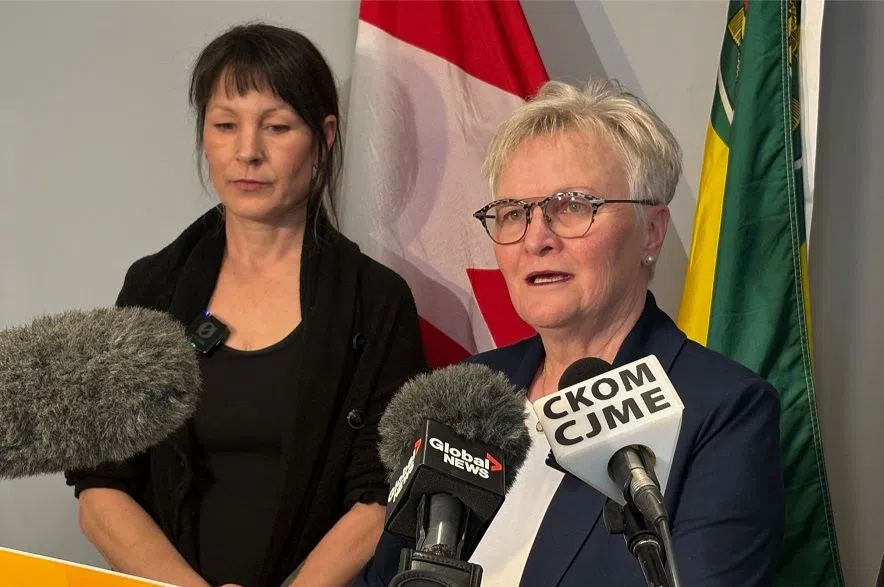
“This chronic under funding of education is taking its toll on some of our most vulnerable students we have in our schools,” NDP’s childcare and early learning critic Joan Pratchler said on Wednesday.
“Some divisions reported rates of exclusion as high as 23 per cent,” she said. “This is against the law and it’s unacceptable.”
Pratchler said the NDP is now calling on the province’s education minister Everett Hindley for an emergency funding plan to be put in place by the end of the year.
Pratchler said more professional teachers are needed in Saskatchewan, and educational assistants to support them.
“If school divisions have funding, they know exactly what to do,” she said. “One of the most researched areas in education is intensive needs students.”
Erin Furgeson has a child with complex needs, and said inadequate classroom support not only sets children back academically, but socially from their peers.
“Every exclusion, every half day, every phone call to pick them up early, every time they’re told we don’t have the staff today, chips away at their confidence, their friendships, their belonging and their future,” she said.
From Furgeson’s experience, classrooms are overfilled and are lacking property trained educational assistants. She said such support is crucial as educational assistants understand specific needs, can communicate effectively, and help de-escalate stressful situations.
“These are kids that already have mountains to climb, they have a lot of hurdles to get over and we keep throwing more and more obstacles in their way,” Furgeson said.
In September, classroom complexity teachers were introduced to schools as part of the last round of provincial collective bargaining last spring. The arbitrated decision will provide Saskatchewan with 500 additional teachers.
Schools with more than 150 students receive one full-time class complexity teacher and smaller schools receive a part-time decision.
Furgeson said one position per school isn’t going to help the demand for support needed in schools.
“What we want is more actual everyday support in the classroom, one on one,” Furgeson said.