
Wood file: Canada can lose occasionally and still be No. 1
Canada was snakebit in the gold medal hockey game, and sometimes, even when you dominate the other team, you come up sho...
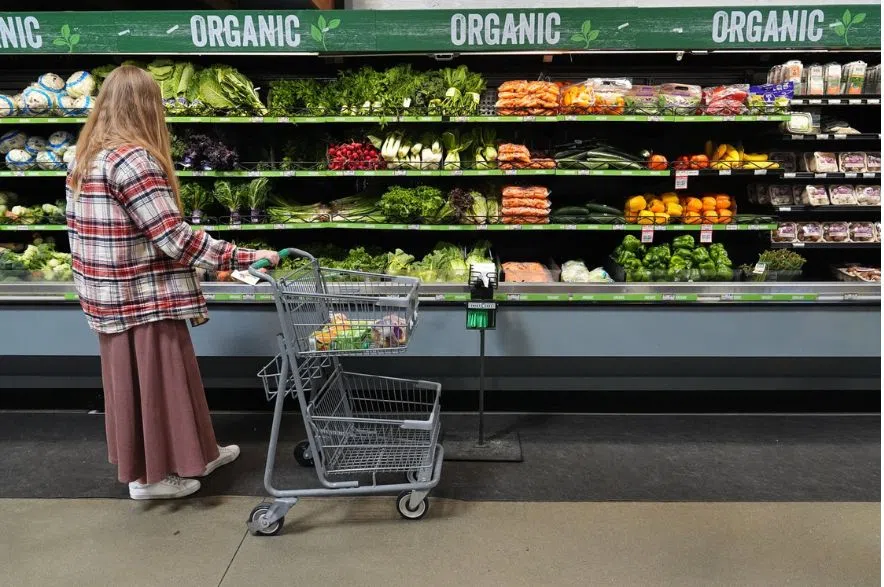
Grocery prices are already stretching family budgets, but shoppers say news of another increase expected next year feels like a breaking point.
A national food report projects grocery bills could rise by about six per cent in 2026, adding nearly $1,000 a year to the cost of feeding a family of four. For Executive Director Denis Simard with the Al Ritchie community association, the impact is already visible.
Read more:
“Families were already having to make choices between utilities and food,” Simard said. ” These changes might literally be the difference between people being able to feed themselves or not.”
Simard said his organization had gone from helping about 50 families a month before the pandemic to roughly 3,000 families a month today. He said the surge is “unsustainable” and said many households no longer have room to cut back.
“You get to a point where you can only cut back so much,” he said. “In the end, it comes down to the inability to feed your family.”
At a Regina grocery store, shopper Jordan Bedell said the projected increase did not surprise her, but it’s still frustrating.
“It already went up last year and the year before,” she said. “So it increasing does not surprise me. It is more so just like… great, thanks.”
She said staple foods had nearly doubled in price over the past few years.
“Cheese went from seven dollars a brick to about fourteen,” Bedell said. “If anything else doubled like that, people would lose it.”
Her household of five prioritizes healthy eating, but she said it has become increasingly complex. Bedell now buys meat from local butchers, which can be cheaper, but requires multiple stops.
Even she says the gap between healthy and unhealthy food has widened.
“If you even want to eat healthy, you cannot afford it,” she said. “My healthy (grocery) cart was almost double.”
When asked whether the country had reached a crisis point, Bedell did not hesitate.
“One hundred per cent,” she said, “Most people cannot afford their basics.”
For senior Beverly Blampied, the rising cost of food has become overwhelming.
“When they put stuff on sale for certain prices, I don’t know why they cannot keep them down,” she said. ” When they put them up, they really put them up.”
Blampied lives with her daughter, which she said is the only reason she can manage.
“If I were on my own, I could not afford it,” she said.
She has really cut back on many items.
“No more steak, it’s chicken when it is on sale,” she said, “Even that goes up.”
If prices continue rising, she said she may be forced to seek support.
“I suppose we would have to go to the food bank,” she said. “I do not know what else you do.”
Blampied also said Canada had reached a crisis point.
“We have,” she said. “Companies are trying to make too much money.”
Simard said rising prices will push even more people toward community services that are already stretched thin.
“I wish it did not come down to the nonprofit sector to find the solution,” he said. “I wish there were an economic one. A government one. Something has to give.”
For many shoppers in Saskatchewan, that tipping point may have already arrived.
–with files from The Canadian Press