

Murray Wood: Who's hot... and who's not?
Every Friday, Murray Wood takes a look back at the week's news and decides who's hot... and who's not. This week's list ...
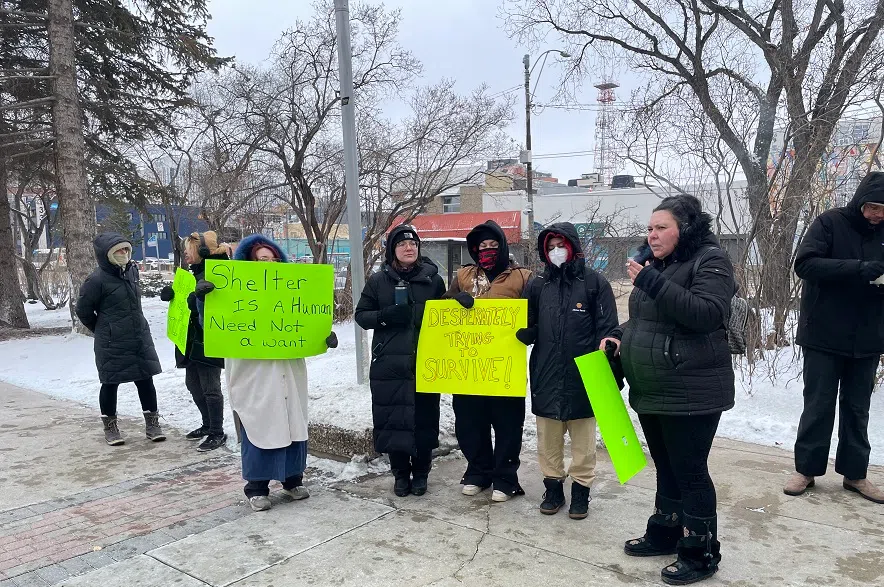
Attendees at a rally for the homeless outside Saskatoon City Hall called for centralized encampments to help prevent people from freezing to death, but the city’s fire department says that’s not a viable solution.
Jessica LaPlante, an organizer of Wednesday’s rally, said there should be 20 small encampments “all over the place in designated areas.” She said a system of smaller camps could help prevent some of the issues that frequently surround larger encampments.
Read more:
If the city doesn’t allow them, “then we may as well start counting the people that we’re gonna lose,” LaPlante said.
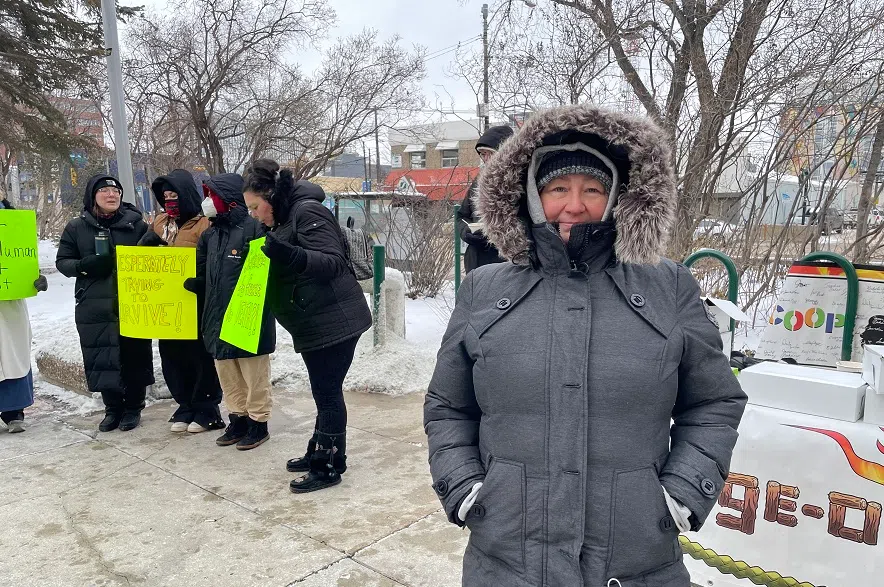
Rally organizer Jessica LaPlante said without encampments, people will die out in the elements. “How many more do we need to count?” she asked. (Marija Robinson/650 CKOM)
It’s a sentiment echoed by rally attendee David Fineday.
“I hate to say this, but I hope they have enough body bags,” he said.
According to Fineday, the City of Saskatoon has taken too long providing warming centers and support for homeless people, and he said he’s prepared to take action unless something changes immediately.
“If I hear anything happening, people losing limbs, people getting chronic illnesses, people freezing out on the street, I’m going to be (doing) the same as last year and I’m going to go make an encampment with a fire,” he said.
Fires at encampments are a major cause for concern for the Saskatoon Fire Department.
Deputy chief Yvonne Raymer said there have been 90 fires at encampments in the last two months alone, with one recent incident leaving two people injured. She said the fire had the potential to be lethal, and a person shouting about the blaze may have made the difference between life and death.
“Instead of suffering some burns in the areas that they did, they may have actually perished in that fire,” Raymer said.

Yvonne Raymer, deputy chief with the Saskatoon Fire Department, said the city is calling on residents to report encampments because it wants to give people access to shelters or warming centers, reducing the risk of freezing deaths. (Marija Robinson/650 CKOM)
While sending people out in freezing temperatures was a concern for those at the rally, Raymer said the fire department tries to “exhaust every avenue” to ensure that doesn’t happen when firefighters take down an encampment.
She said everyone in an encampment that has accepted support so far this winter has been able to get a place in a hotel, shelter or warming centre.
According to the City of Saskatoon, the fire department works with community partners to engage with occupants of encampments, offering connections to health-related services, transportation and temporary housing options, with the goal of transitioning to stable and longer-term housing.
Raymer, who’s visited cities and with sanctioned encampments and seen the effects firsthand, said they’re just not a good option.
“They can turn very unsafe, and in fact those individuals sometimes end up being infiltrated by even gang activity and drug use,” she said, adding that homeless encampments create a risk for disease outbreaks and human trafficking, in addition to fires.
The fire department also raised issues around rodent infestations and bites, soil contamination “from human waste and chemicals,” physical assaults, theft and vandalism in surrounding neighbourhoods, and safety threats towards emergency workers, requiring a police presence.
“Managing sanctioned encampments can cost municipalities millions of dollars,” the fire department noted in a statement.
“Once a municipality sanctions an encampment area, it becomes responsible for servicing the space and providing resources such as water, toilets, power and clean-up, in addition to emergency services including police and firefighters.”
According to the fire department’s consultations, Halifax’s Victoria Park encampment cost the city more than $2 million for fencing, cleanup and remediation efforts. Likewise, Edmonton spent roughly $2.1 million operating a city-sanctioned encampment for three months.
“If somebody had the recipe and it was successful, we would definitely have duplicated it here,” Raymer said.
Fineday disagreed with the notion that living in encampments creates safety risks.
“If you go into an encampment, that’s a family,” he said. “One person will stay up all night and watch everything so nobody gets into trouble. Nobody can come in there and mess around.”
While Raymer stressed that homelessness is “the provincial government’s responsibility” she did share her thoughts regarding possible solutions to the issue.
She said that means transitional housing, because encampments can’t offer the proper support to guarantee a person’s safety.
Fineday agreed that support services for the unhoused need improvements.
“It’s not just about putting them into a house,” he said, explaining that people with addictions or mental health problems need wrap-around services so they don’t end up back where they started.
Fineday said the city needs a navigation hub where people can access a range of services to help with things like health and housing.
The fire department advised anyone who sees an encampment to avoid approaching it.
Instead, the fire department requested that people report the camp to the city’s 24-hour customer-care centre.
Current response times for the encampment team are approximately one week, the fire department said, noting that calls are prioritized according to levels of risk.
The fire department said currently has six inspectors devoted to encampments, and said demand for the work has continued to increase over the past four years.