

Sarah Mills: My World Cup ticket hopes are dashed once again
Sarah Mills just received another email telling her she hasn't been successful seeking World Cup tickets. The dream is d...
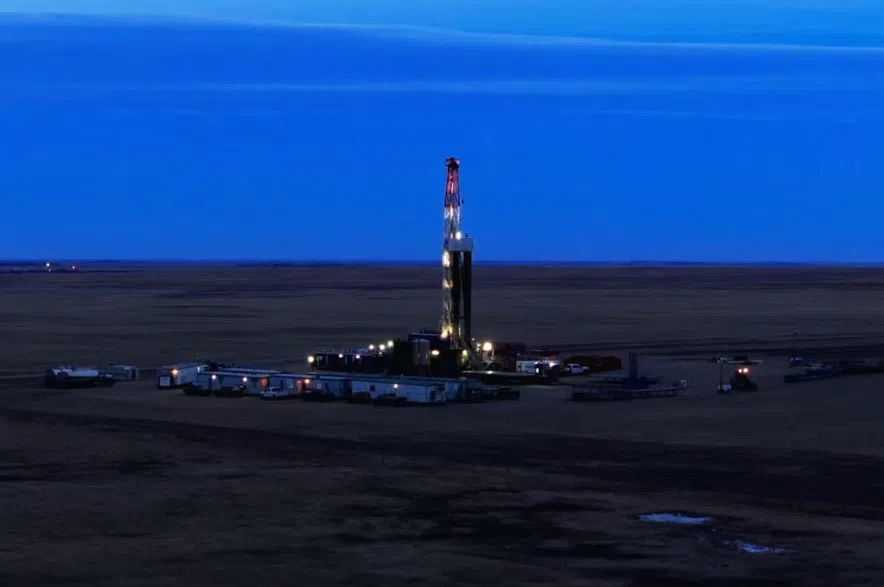
A Saskatoon-based company is eagerly poring over the data from what is described as Canada’s first-ever natural hydrogen well.
Located just outside Central Butte, northwest of Moose Jaw, completion of the Lawson mine was completed Nov. 25 by MAX Power Mining Corp. Molecules of natural hydrogen were detected at multiple points in the well, which is more than two kilometres deep.
Read more:
The well has been cased for further testing, and a service rig is expected to arrive later this week to perforate the casing and capture samples.
Chad Levesque, the company’s head of investor relations, said in an interview this reservoir of natural hydrogen has huge potential.
Levesque said traditional production of hydrogen requires carbon-intensive processes, while the naturally-occurring kind can be tapped as a much cleaner source of energy.
“Hydrogen is amazing,” he said. “It doesn’t have any CO2 emissions, no greenhouse gases. When you do burn or combust the molecule, it produces water vapour.
“From a mining perspective, being able to use natural occurring hydrogen systems alleviates that carbon intensity, and we actually get a clean, renewable, green energy input to be able to take this amazing molecule to the market as we transition out of decarbonized energy fuels.”
The Lawson well is located in what is known as the Genesis Trend, which stretches 475 km from Lucky Lake in the north to Radville in the south. It is also adjacent to the proposed “Hydrogen Hub” in the Regina-Moose Jaw industrial corridor.
A core taken from the well was examined at a Calgary lab and has since been shipped to the Petroleum Technology Research Centre in Regina for testing, and experts from the University of Regina, the provincial government, and the Colorado School of Mines will be contributing.
The goal is to confirm the commercial viability of mining for natural hydrogen in Saskatchewan.
MAX Power’s website compares the potential to the oil boom of the early 20th century.
“The type of enterprise that this will generate, the type of economic development for the province — this is a brand new energy field,” Levesque said.
“There (are) tons of investments all around the world looking for this molecule, and one of the biggest things right now that’s super exciting is AI data centres. These are huge industries and they require an immense amount of energy.
“What a way to tie an AI data centre to a renewable energy source like naturally occurring hydrogen, where you can convert that molecule to a green electron. So you could actually have green renewable energy input to attract some of these large AI data centres, or you can use that to produce electricity for our own baseload energy grid.”
The company is working on a second well site near the U.S. border, with drilling potentially beginning in January.
Read more: