

Murray Wood: Who's hot... and who's not
Every Friday, Murray Wood takes a look back at the week's news and decides who's hot... and who's not. This week's list ...
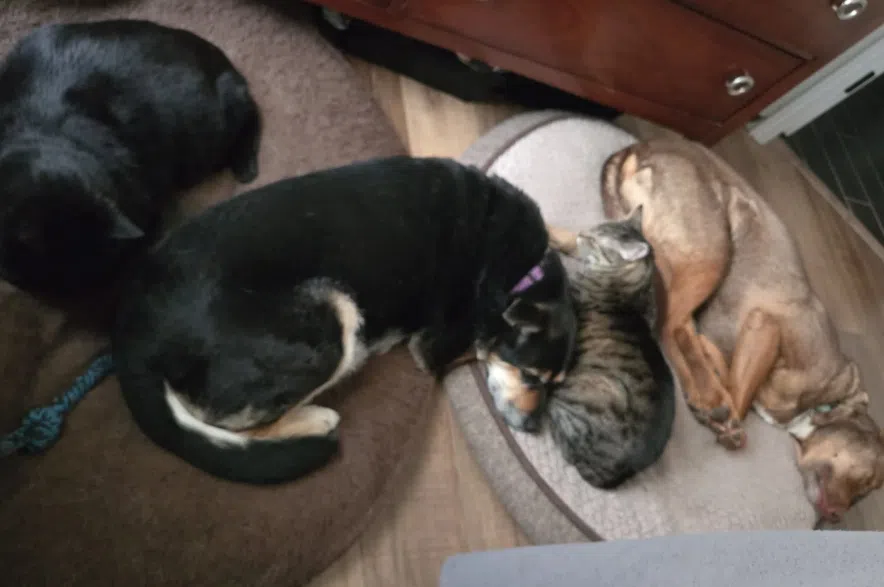
A lack of affordable pet-friendly rentals is forcing some people in Saskatoon to choose between keeping their furry friend or securing a place to live.
Kelly Kavanagh owned her home in Warman for the past decade and adopted two cats and two dogs with her partner.
Read more:
But now, 10 years later, a separation forced Kavanagh to sell that home and start searching for a rental in Saskatoon. It’s a position she never expected to be in when she took on four animals.
“You just don’t think of that when you own your own house and you get your pets,” she said.

Kelly Kavanagh said having to go back through the rental process after 10 years and with several pets, has been “weird.” (Marija Robinson/650 CKOM)
Kavanagh began her search for a pet-friendly rental in August, moving into a basement suite in the meantime where she wasn’t allowed to bring her animals.
Finding a home for all of them, though, proved to be difficult.
“I’ve filled out so many applications, and the minute they ask you how many pets you have, then they just don’t send anything back,” she said.
Kavanagh even tried sending photos of her pets to potential landlords, showing how the four animals are older in age and won’t have the same energy that puppies or kittens do, to no avail.
There was also the possibility that Kavanagh’s partner would take the dogs.
“I’m coming in with four, but I might not be keeping all four,” Kavanagh said. But, “then you’re doing this, you’re explaining it to somebody,” she said who, “doesn’t need your life story.”
At no point during the process, though, did Kavanagh consider giving up any of her pets.
“They’re my family. I’m not getting rid of one or two of them. Like, if I go, they go,” she said, although that insistence meant having to make some compromises.
While her non-negotiables were a home with a backyard because of her two larger dogs, minimal carpeting, and no tenants below since her pets might annoy them, she knew it wouldn’t be a new home.
“You have to go for something a little bit older and different areas that you might not want to live in necessarily,” Kavanagh said.
She also couldn’t afford a bigger home for $2500 a month, especially considering that some landlords charge $25 per month for each pet.
It took three months, but Kavanagh was finally able to secure a rental at the end of October after meeting with a landlord first — and then telling him about her pets.
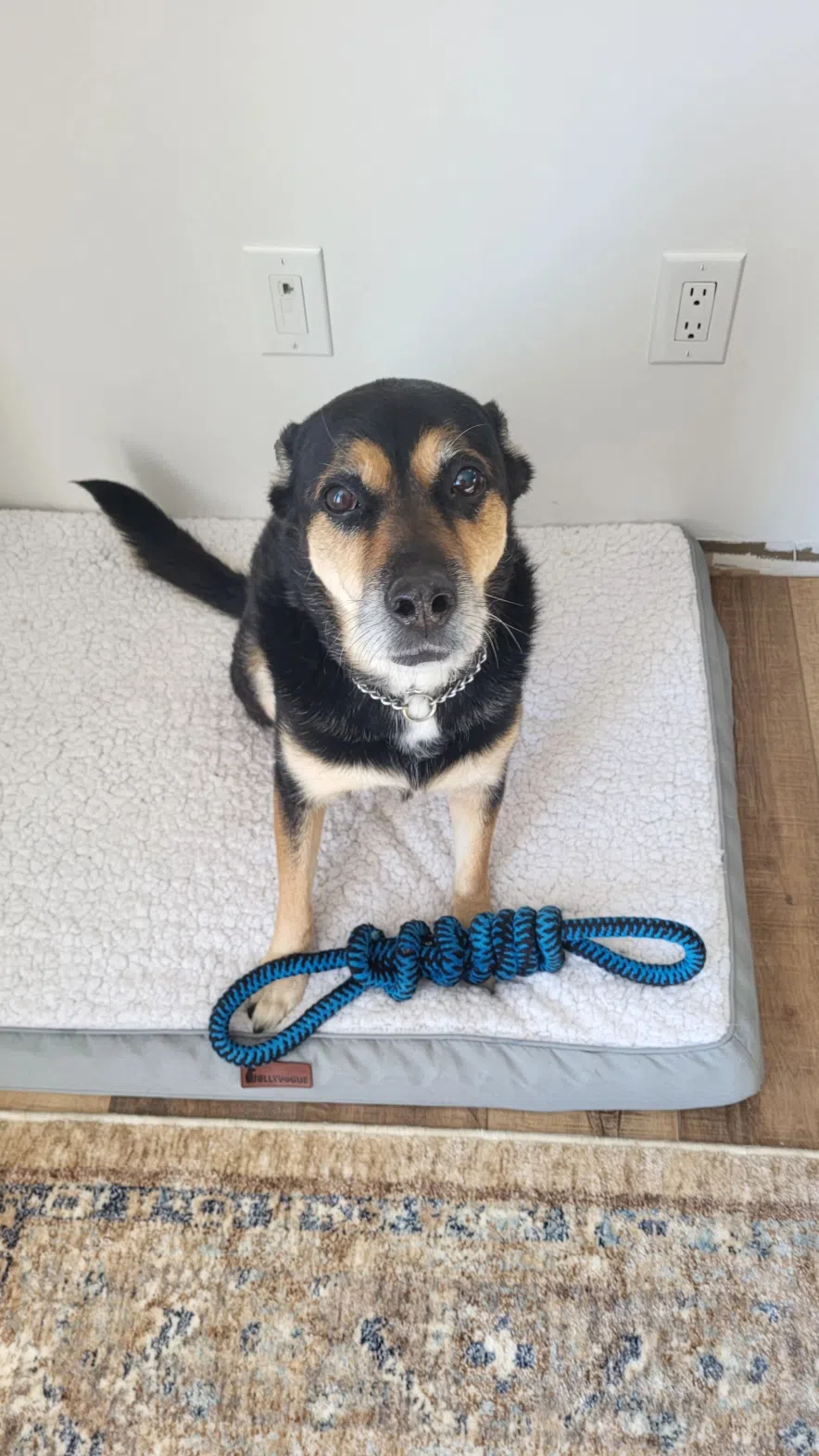
Kata is one of Kelly Kavanagh’s four “babies.” She never worried about having so many pets while she was a homeowner. (Kelly Kavanagh/Submitted)
Not everyone is as lucky as Kavanagh.
Sandra Archibald is the executive director of New Hope Dog Rescue. The Saskatoon-based organization partners with frontline rescuers, placing stray and surrendered dogs into volunteer foster homes.
Archibald said trying to find a home that will accommodate pets at a reasonable price, “is increasingly difficult right now.”
“I have definitely seen an increase over the last three years (of) a lack of housing options that are appropriate and affordable.”
She said that coinciding with the lack of housing is an increase of owners reaching out to the rescue, sharing how difficult it is to find a pet-friendly place to rent, either because there’s nothing available or what’s left is too expensive.
In 2023, 382 people requested to surrender their pets to New Hope. In 2024, that figure rose to 450. So far this year, between January and the start of October the number of requests was already at 300.
“You’re asking for people to cut out a piece of their heart and entrust it with somebody who’s never met them before, and that’s really, really hard,” Archibald said, adding how the rescue isn’t able to take in every dog.
New Hope tries to provide options for people to prevent them from fully having to give up their pet. That includes their hospital care program, which gives people a safe place to temporarily leave their dog while they look for proper housing.
But, other times people have to completely surrender their furry family member.
“That transition is really, really hard for the dog. Some of them just pass through with flying colours but for some of the dogs it is devastating, and it is a long adjustment period,” Archibald said, adding how it’s becoming more common for dogs to struggle with the change.
“From the dog’s perspective, they don’t know what the heck is going on. Why are they not with their people any longer? Why does everything smell different? Why are there people talking different? They don’t speak our language, and they are getting zero say in this whole transaction,” she said.
According to Archibald, the “increase year over year of people who are requesting” to surrender their pets is taking a toll on the organization’s volunteers, who have to manage the intakes and try to find foster homes.
But, it doesn’t come easy for owners, either.
Archibald acknowledged how giving away a dog “is the hardest decision in the world” and anyone who thinks otherwise needs, “to sit back and think about all of the steps that person probably has travelled down already trying to find an alternative solution.”
“They are like children”
The lack of pet-friendly rentals isn’t a well-known problem for one of the province’s major rental authorities.
Landon Field, CEO of Rental Housing Saskatchewan (RHS), said his office wasn’t aware of the issue where renters were surrendering their animals because they couldn’t afford a pet-friendly place.
According to Field, though, the “cost of operating and cleaning has never been higher” for rental housing providers and ultimately it’s up to their discretion if pets are allowed.
But, with roughly 50 per cent of families owning a pet, he said it’s something landlords should take into consideration.
Now that RHS is aware of the problem, Field said the organization would be taking a deeper look into it.
That’ll include “working with different groups that are taking in these pets to explain the benefits of renting with pets, [and] educating landlords and property managers about the realities of renting with pets,” he said.
What Archibald wants landlords to know is that if rent is reasonable and people are able to bring their full families with them in a move — including pets — they’re more likely to stay, making for less work in the long-run.
But, requesting that owners surrender their pet is like asking some people, “to take their three-year-old child and find a new home for it,” she said.
It’s a sentiment echoed by Kavanagh, who said landlords need to look at pets as an “extension of your household.”
“Don’t just automatically not allow people to come and live there just because they have pets. They are like children. You’re gonna say that they can’t take their kids with them when they move in? Sorry. I know that’s extreme, but like, in a way, right?” she said.
While Kavanagh recognizes some of the hesitancy about renting to pet owners, she said responsible ones like herself will ensure their animals don’t wreck anything.
But, even though Kavanagh vows to take care of her new space, she has a longer-term goal in mind.
“Hopefully, maybe someday, I’ll get to buy my own house again,” she said.
Read more: