

Murray Wood: Tent cities in public spaces are not OK
Murray Wood says we are being told we have to accept homeless encampments in city parks. Do we, really?
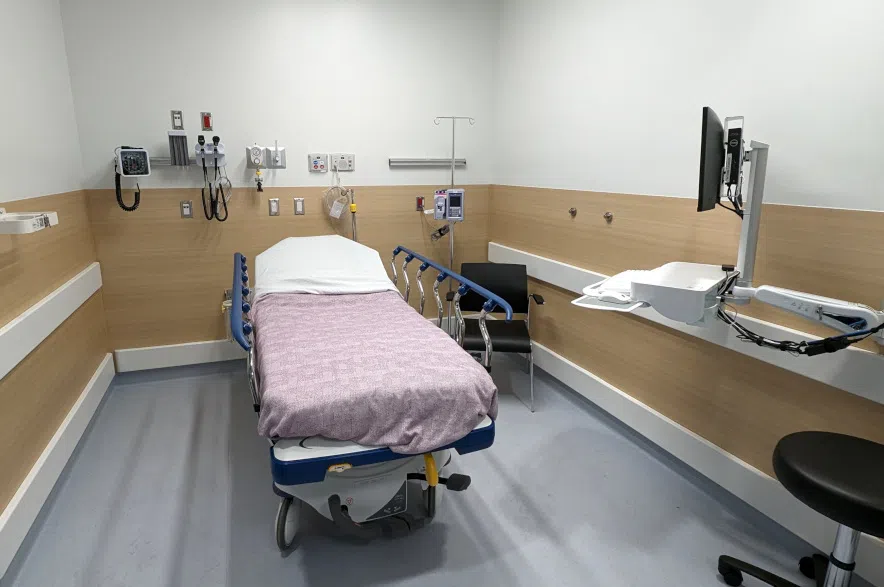
When questions are asked about the biggest issues facing Saskatchewan ahead of the provincial election, health care invariably comes up.
It’s top of mind for people in cities and rural areas, and has been top of mind in politics since the COVID-19 pandemic.
A recent rally in Regina for nurses brought staffing issues to the fore.
At a nursing rally in #yqr where they're frustrated over overcrowded hospitals and understaffed units. pic.twitter.com/6Hf5e79VrP
— Lisa Schick (@LMSchickler) October 3, 2024
Stephanie Fehr is a registered nurse and works at St. Paul’s Hospital in Saskatoon.
“This broken system is pushing us beyond our limits, no health-care worker in Saskatchewan is okay right now,” she said during the rally.
Afterward she spoke to media, giving an idea of what a typical day can look like in the hospital’s ER. She said they work 12-hour shifts and are often short-staffed, beds in the ER are taken up by admitted patients from the hospital side so ER patients often get treated in the waiting room – taken on by the triage nurse.
She said they will have 41 admitted patients, 33 beds, and 118 patients with emergencies every day.
“The weight of the care, it’s so heartbreaking for our nurses that, we’re trying our best and we aren’t able to give any sort of semblance of safe patient care at all,” Fehr explained.

(Lisa Schick/980 CJME)
Fehr and other nurses at the rally said they often have to make “heartbreaking” decisions every day, like moving an elderly man into a hallway bed so another patient can have privacy.
Hospitals in Regina and Saskatoon frequently make headlines for being over-capacity, St. Paul’s Hospital in Saskatchewan was warned for breaking fire codes by having so many patients in beds in hallways.
These problems create situations where health-care staff are quitting because they can’t take the load and the moral strain, meaning the other staff have to pick up the slack.
Staff isn’t only a problem in urban centres – it’s often even harder to convince workers to head out to rural Saskatchewan to fill position.
Susan Desjardin is a nurse who works at the integrated health facility in Herbert, which is about 200km west of Regina. She said the big problem there is also the nursing shortage.
“You can hire all the nurses you want, but unless they want to come and work where you are,” she said.
The facility has a long-term care side, and Desjardin said there is one nurse for 31 residents, and on the acute side there are RNs and an LPN and, sometimes, a float nurse. But she said when there’s a code it leaves the rest of the patients and residents neglected because there are so few of them, and they all have to attend the code.
Health-care workers say a lack of family doctors contributes to the situation – leaving many people’s only option being the hospital for their health-care needs. Many people don’t have a doctor, or say they’re waiting more than a month for an appointment.
Donald Kirkham lives in Grenfell. He said he tried to see his family doctor for some drops for an ear infection, but was told he’d have to wait eight days.
“The same doctor here also services Wolseley and Indian Head and it can literally take weeks to find an appointment,” said Kirkham.
Anything more serious, people in Grenfell and elsewhere have to drive more than an hour to Regina and, sometimes, pay hundreds of dollars for a ride if they can’t drive themselves.
Issues getting special care and attention are no better for many in the province
Lindsay Rogers had to wait 15 weeks last year to have a biopsy for a lump found in her breast – the benchmark for the health authority at the time was three to six weeks.
The biopsy ended up coming back benign, but she said the experience and the stress of waiting was atrocious.
“The waiting and the not knowing, can cause more harm – the stress of that – to someone’s body, when they already should be taking care of themselves as much as possible,” Rogers said.
The province, just this month, once again has a practicing pediatric gastroenterologist – child gut doctor – after about a year and a half with no such specialist to speak of.
Tracey Gartner was at loose ends when the previous specialist left in May 2023, leaving her young daughter without a doctor.
“I’m scared of what that looks like for my daughter, and for the other children out there – my daughter’s not the only sick one in this province,” she said at the time.
Patients were being sent out of the province for nearly a year and a half.
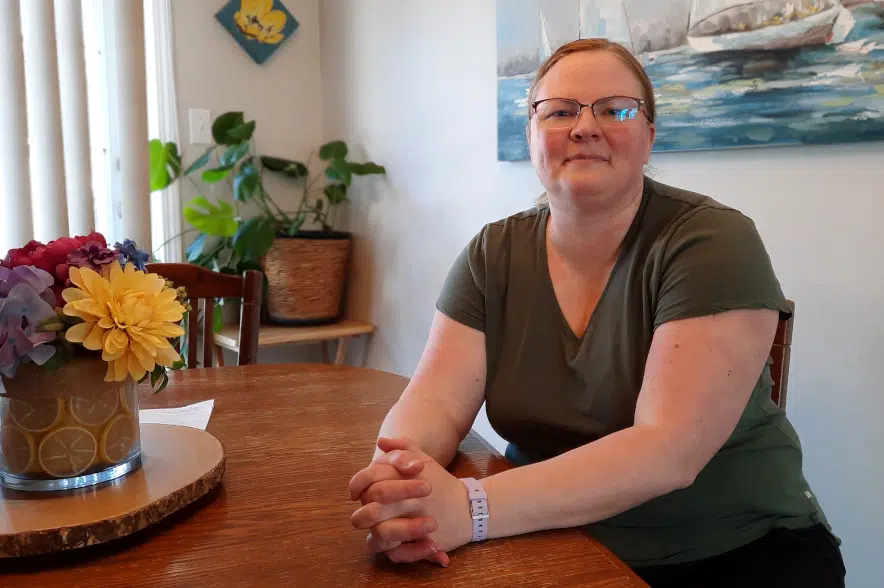
Tracy Gartner is frustrated and upset after finding out her daughter’s pediatric gastroenterologist — the only one in the province — is closing down her practice. (Lisa Schick/980 CJME)
Both Gartner and Rogers praised the health-care workers they were able to see, saying they’re amazing and, in the case of the gastroenterologist, should have been treated better.
Problems in the system range far and wide, including a lack of support staff, a serious need for long-term care beds, and a rising mental health and addictions problem which feeds right into the health system.
Health care is getting no little amount of breath during the election campaign, with both sides asking in turn who voters trust to helm the system into the future.
While these problems have come up or, in some cases, gotten worse under a Sask. Party government, it has implemented pilot projects and initiatives in an attempt to fix things, though some have debated their efficacy.
Government opened an Urgent Care Centre in Regina, with another on the way in Saskatoon. Government implemented a health human resources plan and brought back a Crown Corporation to recruit more doctors. And the idea of a nursing task force – which nursing have been requesting for years – was floated just before the writ was dropped.
In its campaign, up to now the Sask. Party has offered tax incentives, and promised to extend health coverage for glucose monitoring.
The NDP has floated its plan, putting more than $1 billion dollars into the health system to hire more workers and shoring up ER problems with things like fully opening the ER at Saskatoon City Hospital.