

Murray Wood: Arrest in 2001 Saskatoon assault case should make perpetrators worried
A 52-year-old man has been charged in connection with a 2001 sexual assault allegation in Saskatoon. Murray Wood says he...
The Saskatchewan Health Authority (SHA) is decreasing some services in preparation for an increase in COVID-19 cases.
On Thursday, the SHA said it was activating “the next phase of its surge plan.” Part of that plan includes slowing down some services, a move which will allow the authority to redeploy up to 600 full-time equivalent staff to help respond to COVID.
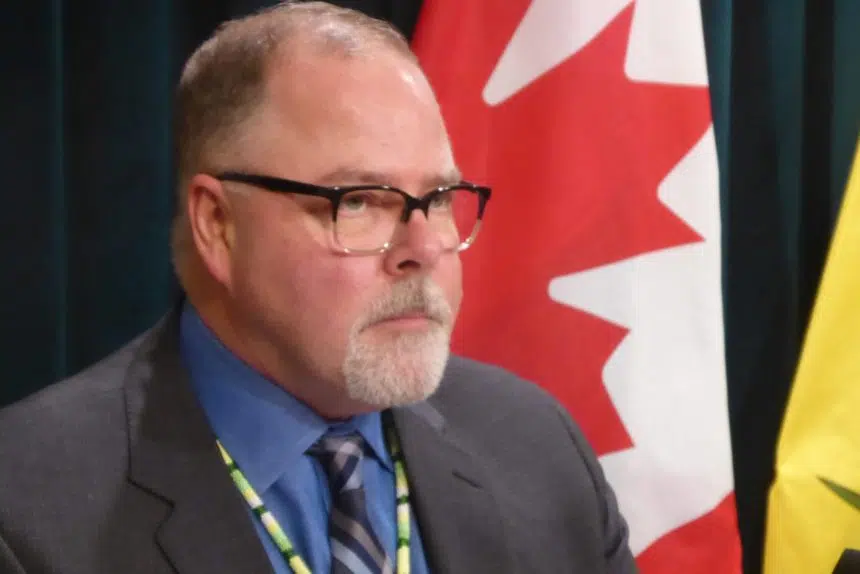
“Case surges have been too high and projected case growth in the next two weeks is even higher. We need to act now and we have,” SHA CEO Scott Livingstone said during a media conference.
Livingstone said SHA officials recognize how valued some of these services are to people.
“By not acting right now on behalf of the health system we have the potential to be overwhelmed, and this would significantly risk our ability to care for the most urgent patients in both COVID and non-COVID settings,” he said.
Livingstone said the SHA is committed to making these slowdowns and pauses as localized, targeted, and time-limited as possible.
Derek Miller, the SHA’s emergency operations centre lead, said these decisions aren’t taken lightly.
“It’s very difficult to make these decisions … as we know that every time you reduce a service, you have a direct impact on a patient and on the care that they need,” he said.
Miller said SHA officials will be looking at modelling and case numbers every week to decide how long these measures will last and if more are needed.
“Basically, we need to keep one step ahead of this virus,” said Miller.
According to the SHA, services such as primary health care, elective surgeries in urban centres, endoscopy/cystoscopy procedures, women and children’s programming, diagnostics, therapies, ambulatory care, registration resources, environmental and food and nutrition services, rehab services and home care will be reduced.
The SHA noted the majority of the services will still be available, but not at the same level they were before. As well, the reductions will vary by location and service type.
However, there will be instances when services will be paused temporarily. Those include dental, therapeutic, rehabilitation and active living programs.
By moving 600 staff members to pandemic response, the SHA hopes it can improve its capacity for testing and contact tracing. According to a media release, the move also will allow the authority to “identify the health-care workers necessary to expand hospital and ICU capacity to help keep COVID and non-COVID patients alive and ensure the SHA can provide the care they need.”
Livingstone said it’s important to act now so the SHA can keep up with the growth of COVID in the province. The total number of cases went over 9,000 for the first time Thursday, reaching 9,244.
According to the SHA, the surge plan will create capacity for 64 COVID patients that projections say will require intensive care by mid-December. As of Thursday, 24 people were in Saskatchewan ICUs.
The SHA noted that expanded capacity is equivalent to 28 per cent more ICU beds than exist right now in Saskatoon and Regina combined.
As well, the SHA hopes to create capacity for 250 more patients who will require inpatient hospitalization by mid-December, if projections are correct. There were 104 people receiving inpatient care as of Thursday.
The SHA also hopes to increase its ability to do contact tracing for an average of about 560 cases per day. The authority’s expectation is that more than 6,000 hours of work per day will be created for contact tracers if cases get to 560 by mid-December as projected.
There were 259 new cases reported Thursday.
Activating the surge plan also will help the SHA build up its labour pool in case there are outbreaks or situations where large numbers of staff are required to isolate.
More information on the services that are being reduced or paused is available on the SHA website. The authority also expects to communicate with patients who may be affected.
Livingstone said the number of cases and their effects on the health-care system are up to the people of Saskatchewan, urging everyone to follow the public health guidelines to reduce case numbers.
Two-week forecasts are part of the reason the SHA has decided to slow some services down, so Miller gave an update on modelling Thursday.
He said over the past 30 days the number of active cases is up 530 per cent and hospitalizations are up more than 400 per cent.
Currently about 31 per cent of ICU capacity in Saskatchewan is being used by COVID patients, while forecasting puts that number at 85 per cent in the next two weeks.
According to the SHA’s forecasting, lab confirmed cases could be up to 562 per day in the next two weeks. The forecasts also put hospital cases up to 250 in two weeks and ICU cases up to 64.
About the modelling, Livingstone said it’s not a crystal ball, but 14-day forecasts over the last few weeks have been quite accurate.
“We can’t get caught off-guard to the point where we’re not having resources in place to deal with an influx of cases at that level,” said Livingstone.