
Sarah Mills: My World Cup ticket hopes are dashed once again
Sarah Mills just received another email telling her she hasn't been successful seeking World Cup tickets. The dream is d...
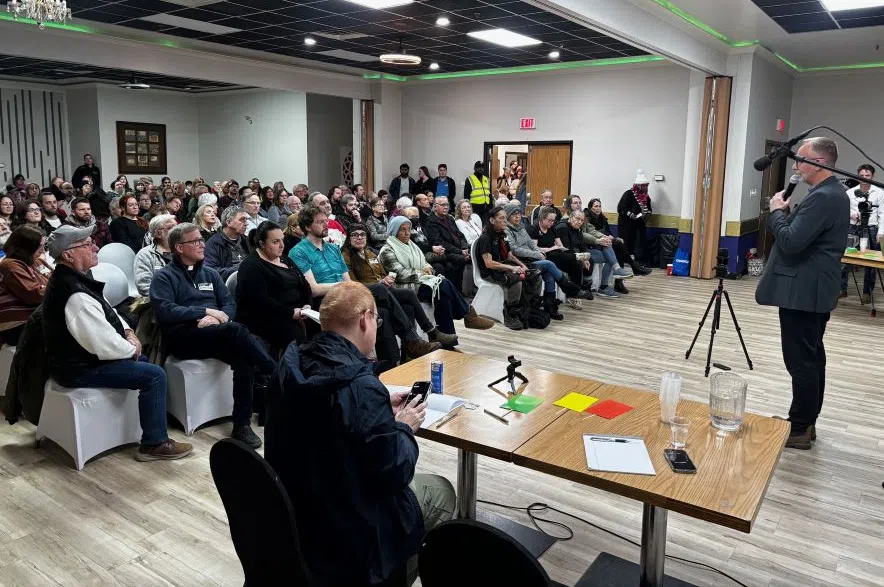
It was standing room only at Saskatoon’s Confederation Inn on Thursday evening for a community meeting billed as an event to discuss the effects Prairie Harm Reduction’s supervised drug consumption site on 20th Street West has had on neighbouring businesses and residents.
The meeting, hosted by Saskatoon West Conservative MP Brad Redekopp, the Riversdale Business Improvement District and the newly formed West Saskatoon Business Association, drew about 150 attendees.
Read more:
Redekopp said part of the reason he decided to host the gathering was because of the number of calls his office has received from members the public concerned about the issues.
“We’ve received complaints or comments about Prairie Harm over the entire time I’ve been an MP,” he said.
“More recently, people have been concerned about the application for renewal that they have and the requirement to do consultations that didn’t feel like they had been consulted.”
Redekopp said he hoped Health Canada would listen to local feedback as it made its yearly exemption decision. He said he’s visited the site, and wasn’t pleased with what he saw.
“It’s a bit of a depressing place to go. There were many people in the back alley the day that I was there, and I think the issue is that a facility like that allows people to remain in their state of drug use without actually moving them forward,” he said.
“To me, it’s not a compassionate thing to allow people to stay in their current state. I think, as a society, we need to help people that need help. Actually give them recovery and treatment,” the MP added.
Prairie Harm Reduction supporter Skylar Forsberg countered those sentiments, arguing that the organization provides vital services and helps better the local community while protecting drug users from overdoses.
“It keeps them safe. It keeps them alive, and it gives them a place to go so they don’t have to be homeless on the street,” she said.
“They don’t have to go and overdose in a dumpster. They don’t have to overdose in the street. They don’t have to leave their needles everywhere.”
Zenovie Kindrachuk, administrator of the Ukrainian Orthodox Cathedral on Avenue J South and 20th Street West near Prairie Harm Reduction, said he has concerns about crime in the neighbourhood, and the issues are affecting the church’s congregation.
“It’s unfortunate, but we have to be mindful of our parishioners and their safety concerns,” he explained.
Homeless advocate David Fineday said while the work that Prairie Harm Reduction’s staff members do is important, crime, gang activity and overdoses – some of which he said he’s personally witnessed – also need to be addressed.
“Prairie Harm is a good place, but it needs to move to the next level,” he said, adding that more trained medical and addictions treatment staff are needed, at the bare minimum.
A host of business owners, residents, former drug users and others also spoke about their own experiences and frustrations with rising crime levels and problems including vandalism, theft, homeless encampments, assault, robbery, murder, arson and open drug use.
Representatives from Prairie Harm Reduction and staff at an adjacent clinic also addressed the room, emphasizing that the work they do saves lives every day, as some audience members cheered.
Redekopp said all of the input from the meeting will be summarized and sent to Health Canada, the federal body responsible for approving Prairie Harm Reduction’s supervised consumption site.